Home Basics to Know When You Live Alone
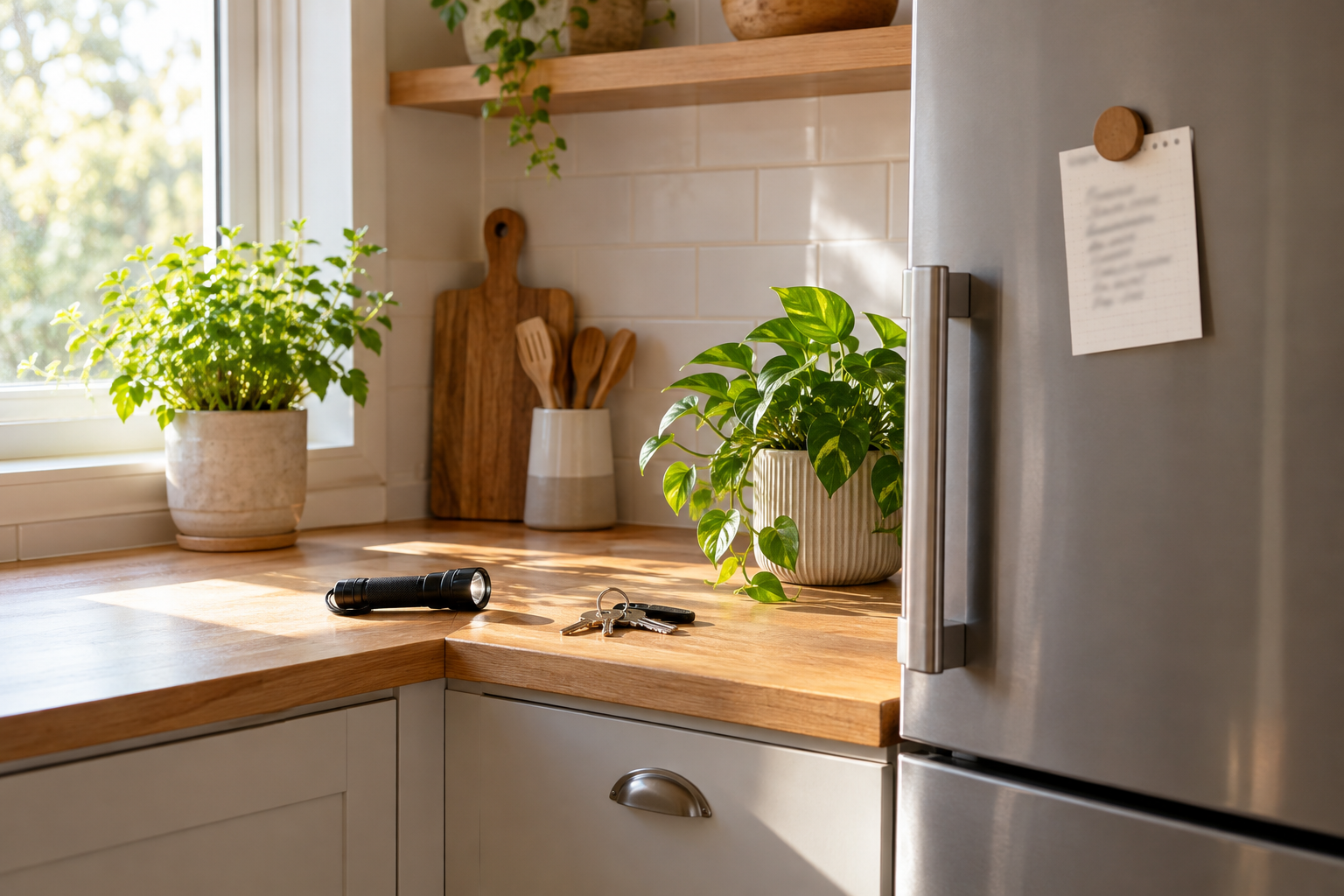
When you live alone, the most useful home basics are knowing where your stopcock and fuse box are, what to do in a power cut or if you smell gas, how to report a repair and which numbers to call. Learn them in your first week, while nothing is wrong, and keep the important numbers somewhere you can see them.
None of this is complicated, and it makes a big difference to how calm you feel at home. Here’s what I have learned, from the fridge door to the fuse box. I live in England, so the details below are for the UK, with a short section for US readers near the end.
Where is the stopcock and how do you turn it off?
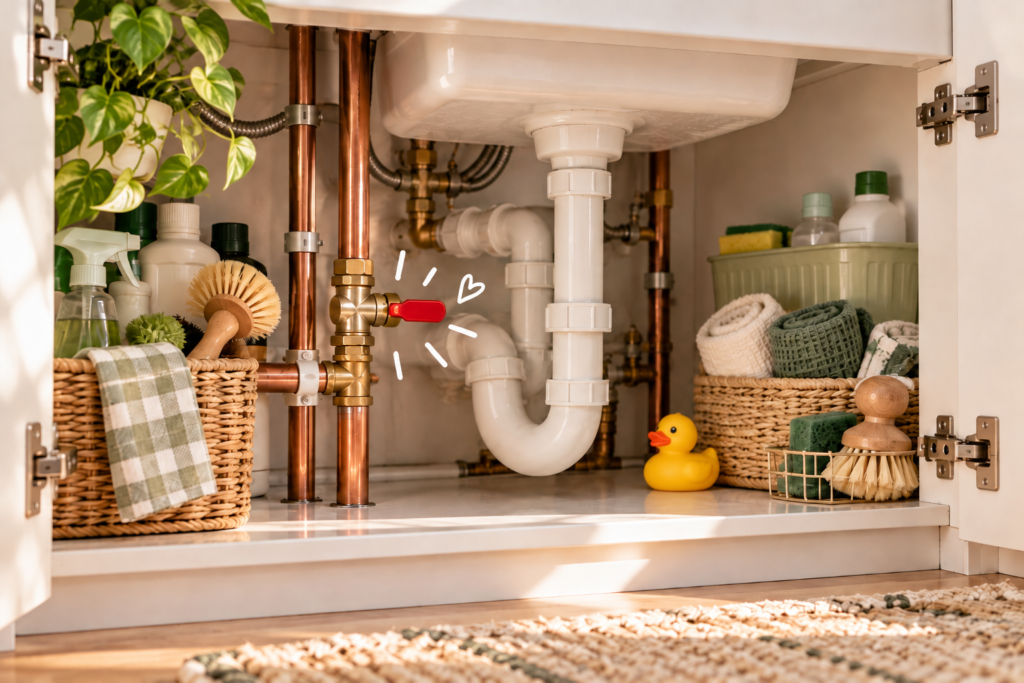
The stopcock is the tap that turns off the water supply to your home. In most UK homes it sits under the kitchen sink, near where the water pipe comes in. It can also be in a downstairs toilet, an airing cupboard or under the stairs.
To turn it off, twist it clockwise until it stops. Do this gently, especially if it has not been moved for years. It’s worth trying once when you move in, so you know it works before you ever need it in a hurry.
If you live in a flat and cannot find it, ask your landlord or housing provider. Some flats share a stopcock or have it outside.
How to reset a tripped switch in the fuse box
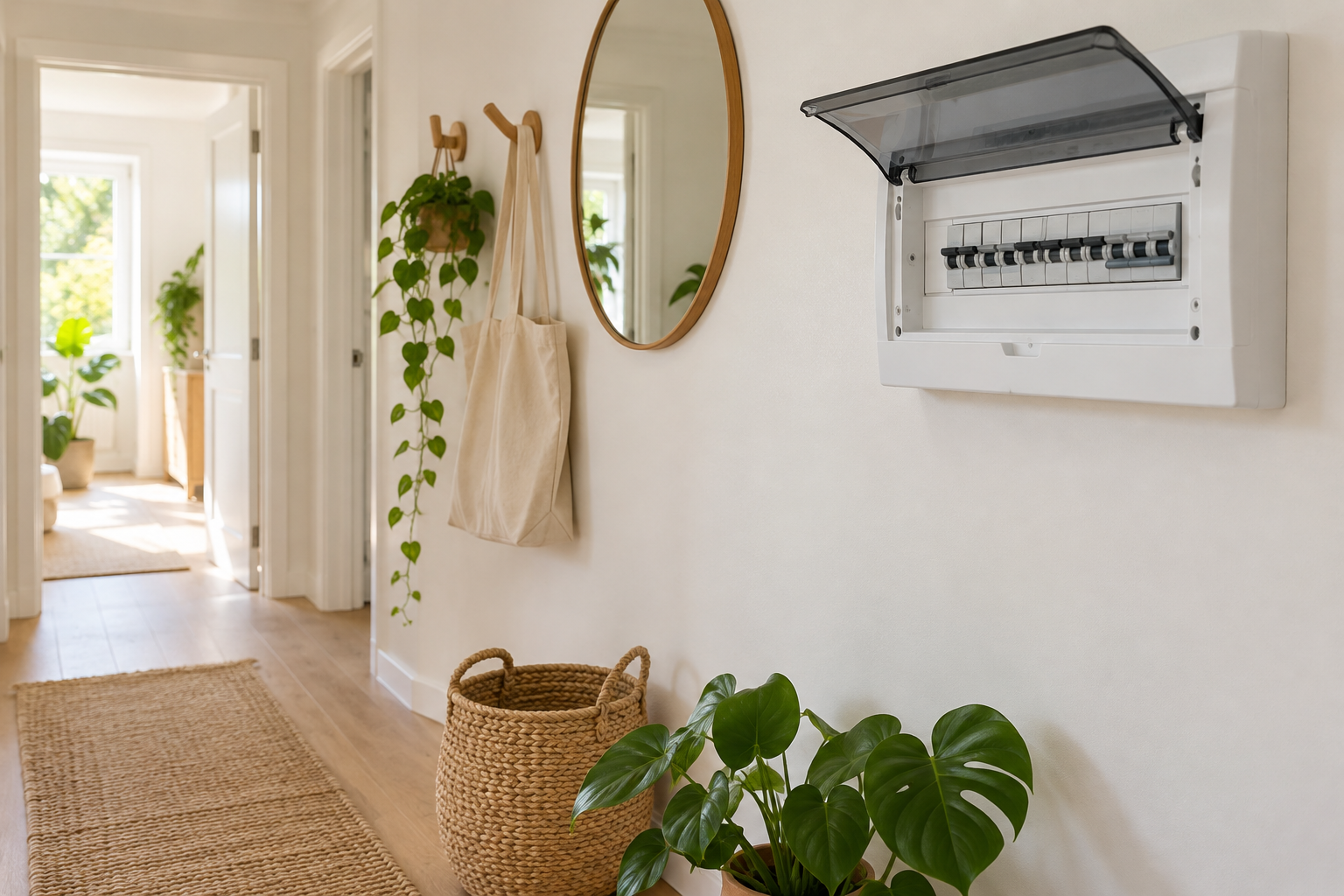
Most homes now have a consumer unit, often still called a fuse box, with a row of switches instead of old-fashioned fuses. Mine was replaced not long ago, so I have a modern one, and it’s far less scary than it looks.
If the power goes off in part of your home:
- Open the fuse box and look for a switch pointing down while the others point up.
- Unplug anything you were using when the power went off.
- Push the switch back up.
- Plug things back in one at a time. If the switch trips again, the last thing you plugged in is likely to be the cause.
If the switch keeps tripping with everything unplugged, leave it off and report it. That is a job for a qualified electrician.
What to do in a power cut
First, check whether it’s just your home. If the neighbours’ lights are out too, it’s a wider power cut. In the UK you can call 105 to report it or to find out when the power should be back.
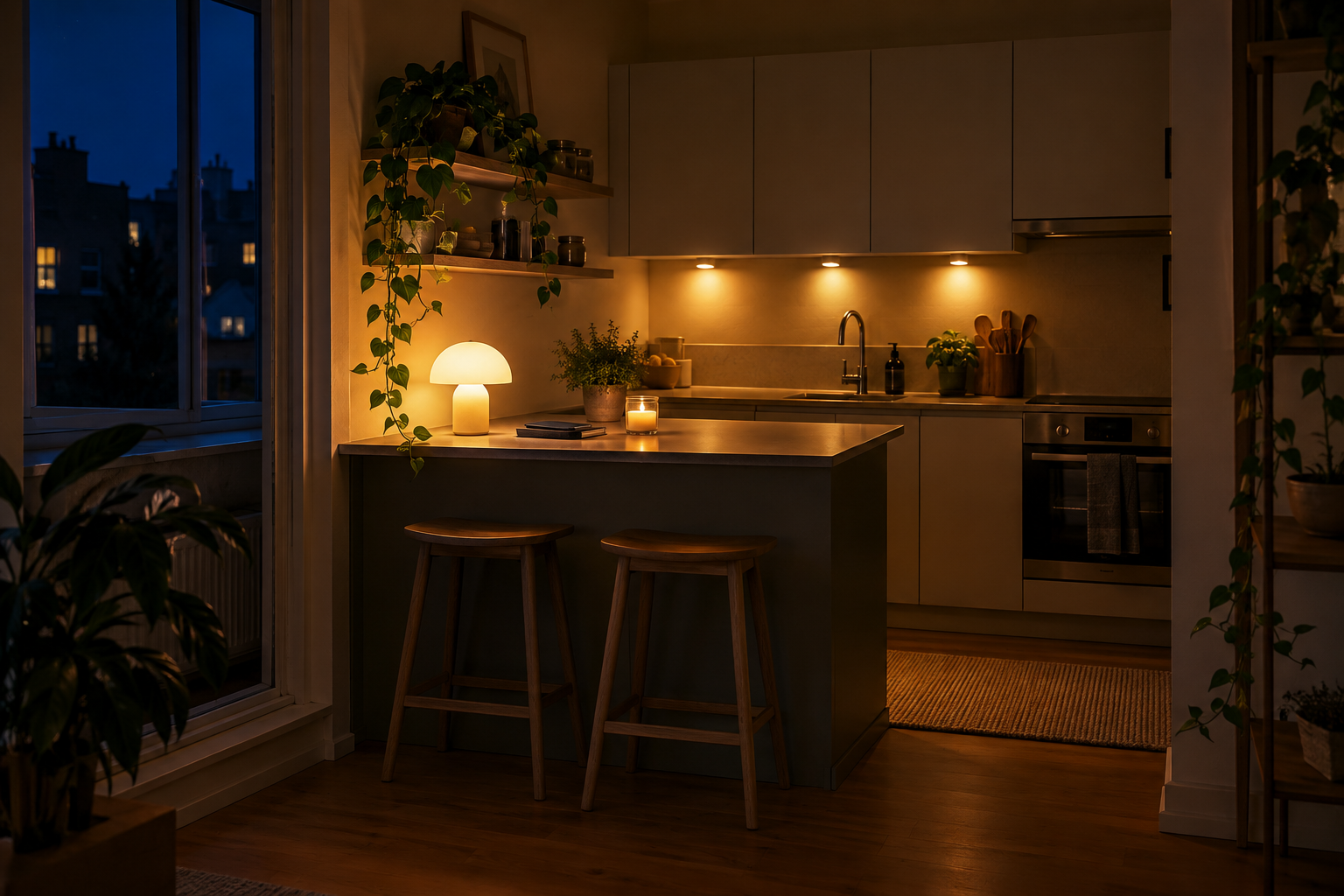
I keep two kinds of light ready. Candles, for a cosy glow, and a few small rechargeable lights for the kitchen that I charge during the day. The rechargeable ones are easy to carry from room to room. If you use candles, keep them in steady holders and never leave them burning in an empty room.
- Keep the fridge and freezer closed, so food stays cold for longer.
- Switch off appliances that were on, so nothing surges when the power returns.
- Keep one light switched on, so you know when the power is back.
- Keep your phone charged in winter, or have a small power bank ready.
What to do if you smell gas
If you smell gas or think there might be a leak, act straight away:
- Open doors and windows.
- Do not use light switches, sockets or anything that could make a spark, and don’t light a flame.
- Turn off the gas at the meter if you can do it safely.
- Go outside and call the National Gas Emergency Service on 0800 111 999.
A carbon monoxide alarm is just as important as a smoke alarm. Test both once a month by pressing the button.
Small fixes you can do yourself
Some problems take two minutes once you know the trick.
- Slow internet: restart the router. Mine was crawling recently, so I restarted it. Switch it off at the wall, wait about 30 seconds and switch it back on.
- A blown bulb: switch off the light first, let the old bulb cool, then check the fitting and wattage before you buy a new one.
- A slow sink: a plunger and a kettle of hot water clear most blockages. Avoid pouring cooking fat down the drain.
- A cold radiator at the top: it may need bleeding with a radiator key. If you rent, check with your landlord first.
Many of the tools for these jobs are on my living alone checklist.
How to report repairs when you rent
Always report faults, even small ones. A little drip or a crack can turn into a bigger problem, and reporting it early protects you as a tenant.
- Report repairs in writing, by email or through the online form, so there is a record.
- Take photos of the problem and note the date.
- Write down the reference number and who you spoke to.
- Chase it politely if nothing happens within the time you were given.
- Do not attempt repairs to gas, electrics or the structure of the building yourself.
Numbers to keep on the fridge
I keep a list of important numbers on my fridge door. When something goes wrong, nobody wants to be searching through a phone with shaking hands.
- 999 for emergencies
- 111 for urgent medical advice that’s not an emergency
- 105 for power cuts
- 0800 111 999 if you smell gas
- Your water company’s emergency line
- Your landlord or housing repairs line, with your tenancy reference
- Your GP surgery, and your vet if you have a pet
- A neighbour or friend nearby who can help
It also helps to have one person who checks in with you regularly. A short call is enough, and these ideas for calling family when you live alone can make it easier.
A five-minute monthly home check
Once a month, walk round your home and check a few things. It takes five minutes and saves surprises.
- Press the test button on the smoke and carbon monoxide alarms.
- Look under the kitchen and bathroom sinks for drips.
- Charge the rechargeable lights and check the torch batteries.
- Take a photo of the gas and electricity meters, so you have a record of your readings.
- Check that the list on the fridge is still up to date.
If you live in the US
The basics are the same, but the names and numbers are different.
- Emergencies: call 911.
- Water: look for the main water shut-off valve. It’s often in the basement, garage or utility room, near the water heater, or outside near the water meter.
- Electrics: most homes have a breaker box, also called an electrical panel. To reset a tripped breaker, push it fully to off, then back to on.
- Power outage: report it to your electric company, and check its outage map for updates.
- Gas: if you smell gas, leave the home straight away without using switches or your phone inside, then call 911 or your gas company’s emergency line from outside.
- Repairs: if you rent, report problems to your landlord or property manager in writing, just as you’d in the UK.
A few questions
Where is the stopcock usually found in a UK home?
Most often under the kitchen sink. If it’s not there, check a downstairs toilet, the airing cupboard or under the stairs, or ask your landlord.
Who fixes things if I rent?
In most rented homes, your landlord or housing provider is responsible for repairs to the structure, heating, hot water, gas and electrics. Report problems in writing and keep a record.
What should I keep at home for a power cut?
A torch with spare batteries, a couple of rechargeable lights, a charged power bank for your phone and the 105 number written down.
Knowing these basics makes a home feel safer and calmer. If you’d like more small ways to settle in, Slow Living for Beginners has 12 easy changes to start with.
With warmth, Zeny