How to Start a Creative Hobby When You Think You’re Bad at Everything
To start a creative hobby when you think you’re bad at everything, pick one cheap activity that looks fun and give it one small project. Let that first try look like a first try. You don’t need talent or expensive supplies to begin, and most people who seem naturally creative simply kept going after their wobbly first attempts.
I know this from both sides. A while ago I tried hand embroidery, just to see, and found out that it suits me. I even made a little scarf for my cat, Shelby, which was a sweet moment. I also tried air-dry clay, and that one didn’t work for me at all. Both stories are in this post, because a hobby that flops teaches you almost as much as one that sticks.
Do you need talent to start a creative hobby?
No. A hobby is something you do for the time it gives you, so the result only has to please you. Skill comes from repeating the same small thing, and everyone who stitches or draws well today once had a messy first go.
Researchers have looked at this too. In a small 2016 study at Drexel University, 39 adults spent 45 minutes making art, and their levels of the stress hormone cortisol dropped in about three quarters of them. Previous art experience made no real difference to the results. A larger diary study from the University of Otago followed 658 young adults for 13 days and found they felt more enthusiastic and were doing better than usual on the days after they had been more creative.
Neither study is a treatment plan, and a hobby won’t fix a hard week by itself. Both suggest that the good feeling comes from making something, and beginners get it as well.
How do you choose a creative hobby you’ll enjoy?
Start with what you’d like your hands to be doing, then check it against your space and your budget. A few questions help:
- Do you like slow, repetitive work? Try embroidery or origami.
- Do you like quick results and a bit of chaos? Try collage.
- Do you want something to do in bed after work? Choose a hobby that fits in a pencil case or a small bag.
- Is money tight this month? Look for something you can start for under £10 (about $10), or with things you already have at home.
Space matters more than people expect. I loved the idea of air-dry clay, but I needed proper room to work, it made a real mess and I had trouble with the material itself. Before you buy anything, picture where you’ll sit to do it and where it will live between sessions. In a shared flat or a small bedroom, that answer decides a lot.
Five cheap creative hobbies for beginners
All five can start with less than £10 of supplies, and most need only a corner of a desk.
Hand embroidery
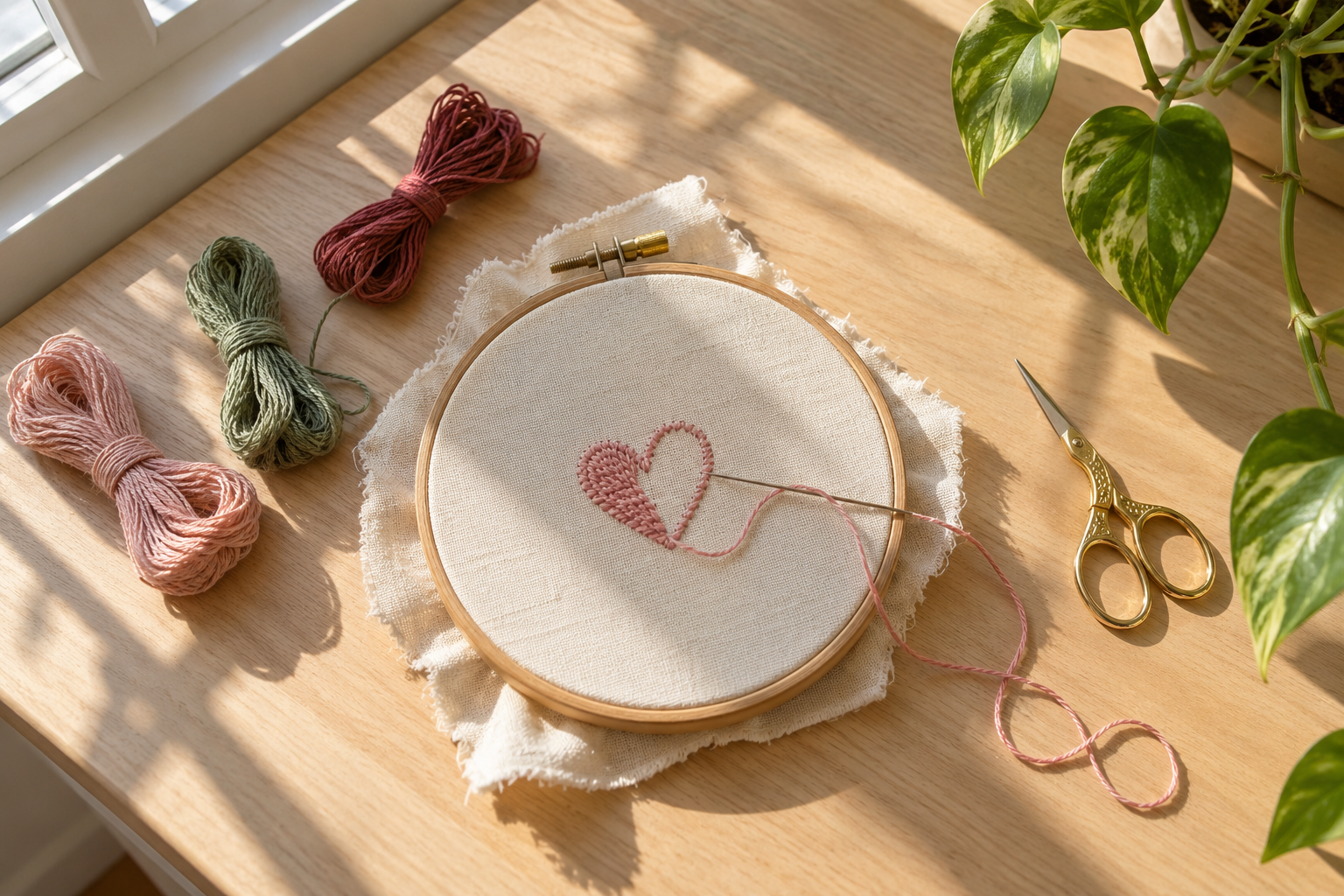
You need an embroidery hoop, a square of plain cotton fabric, a needle and two or three colours of thread. Learn one stitch first. Backstitch makes a simple line, so you can stitch a word, a heart or the outline of a leaf. Everything fits in a small pouch, which makes it easy to keep in a shared flat.
This is the one that clicked for me. After a while of trying it, I realised it was going well, and my first proper project was that scarf for Shelby. Making something small for someone you love is a lovely way to finish a first project.
Collage from old magazines
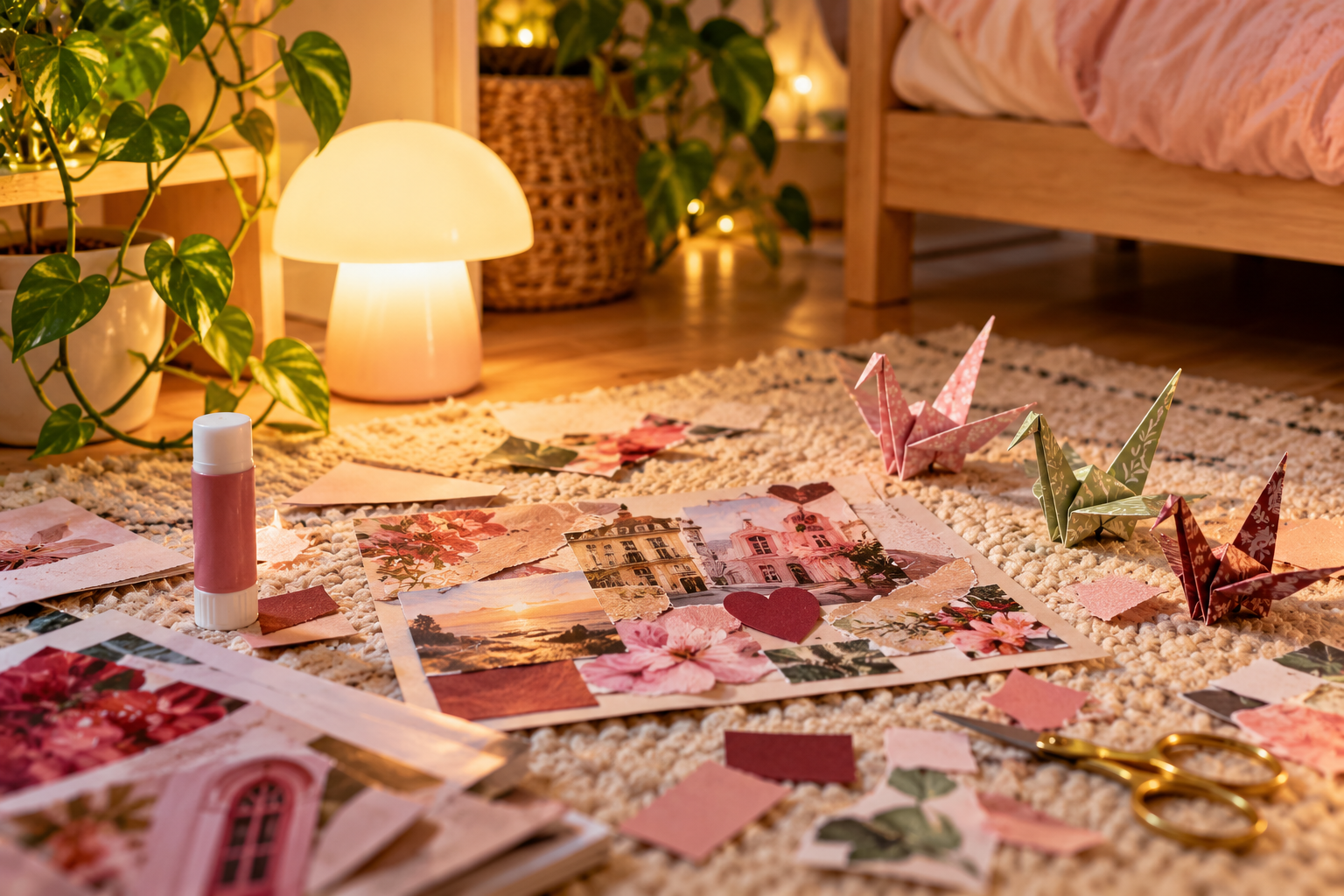
Collect old magazines, free papers or leaflets, plus scissors, a glue stick and a piece of card. Cut out colours and words you like, then move them around until the arrangement feels right. You don’t need to draw at all, which makes collage a good first step if a blank page scares you. A postcard-sized collage is a nice first goal.
Pencil drawing
One ordinary pencil and a few sheets of printer paper are enough. Draw whatever is in front of you, such as your keys or a houseplant. Give yourself five minutes per sketch and stop when the time is up. Short sketches take the pressure off, and a stack of them shows progress faster than one big drawing.
Origami
All you need is square paper, and you can cut it from printer paper if you don’t want to buy a pack. Follow a beginner video for a paper crane or a small box. Folding takes care, but mistakes cost almost nothing: if a fold goes wrong, take a new sheet and start again.
Air-dry clay
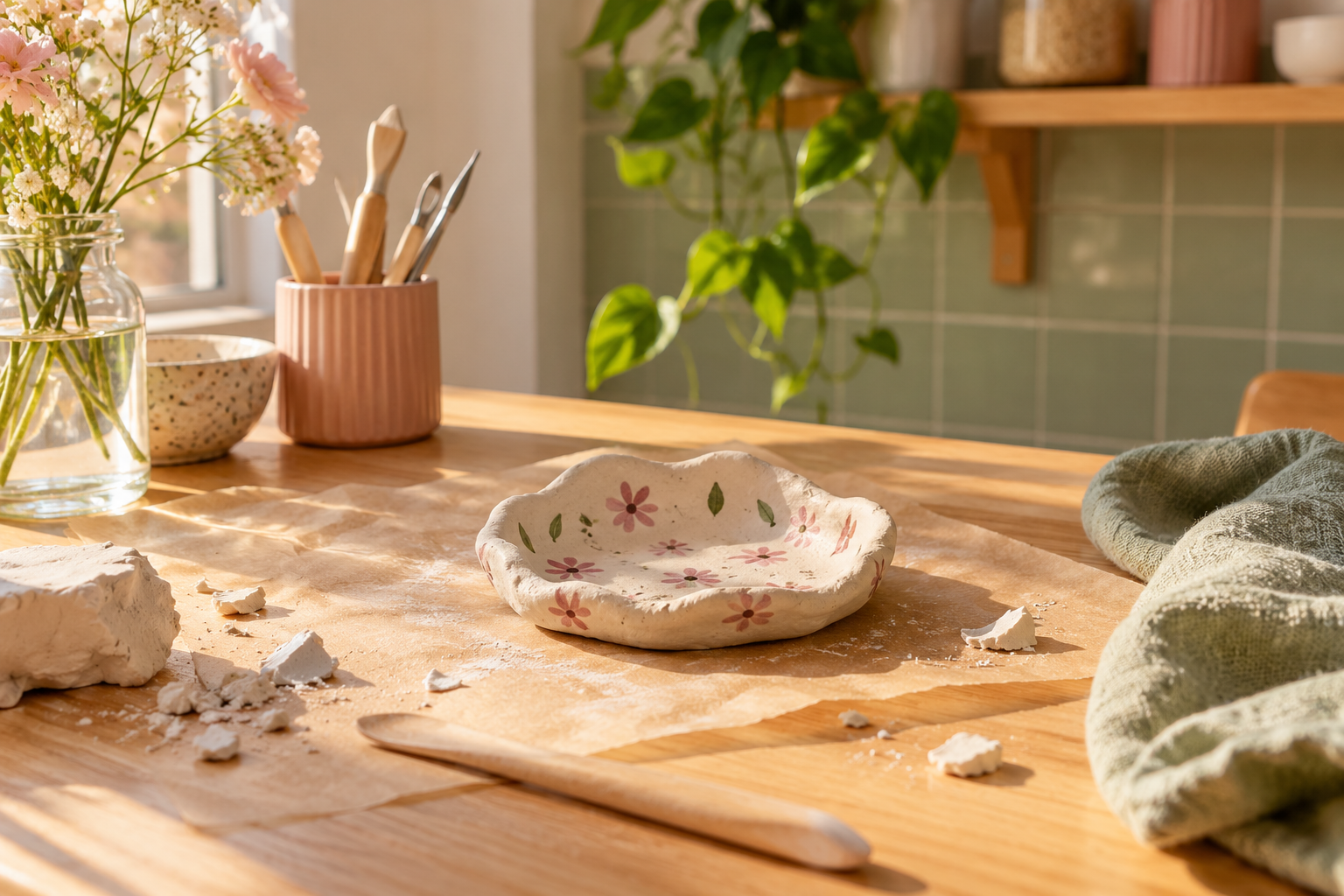
Air-dry clay hardens on its own, so you don’t need a kiln. A small trinket dish or ring holder is a good first project. To be honest, this one was my no, for the reasons above. If you have the space and don’t mind tidying up afterwards, it’s still worth a try. Cover the table with baking paper and wrap any clay you aren’t using so it doesn’t dry out.
What should your first creative project be?
Your first project should be small enough to finish in one sitting, ideally in 30 to 60 minutes. Finishing something, even something tiny, makes you want to come back to it.
A few ideas to start with:
- one stitched word on a scrap of fabric
- a postcard-sized collage
- three paper cranes
- a five-minute sketch of your keys
It works the same way as micro goals for when you don’t know what you want in life: one small step you can finish today is enough. You can also turn it into an evening for yourself, with music on and your phone in another room, like the at-home ideas in my 21 solo date ideas that cost little or nothing.
What if your first attempts look bad?
They probably will, a little, and that’s normal. The finished pieces you see on Pinterest and Instagram usually come after months or years of practice, and you rarely see the wonky ones that came before them.
Some things that help:
- Keep your first piece and write the date on the back. In a month, put your newest piece next to it. The only comparison worth making is with your own first try.
- Decide in advance that early projects are practice. Nobody else needs to see them.
- If something goes wrong, unpick it, fold a new sheet or turn the page. Mistakes are cheap at this stage.
- Stop while you’re still enjoying it. Ending on a good note makes the next session easier to start.
How do you know if a hobby is right for you?
Give a new hobby three short sessions before you decide. Then ask yourself:
- Did the time pass faster than I expected?
- Did I look forward to the next session?
- Did setting up and tidying away feel like a chore?
- Would I happily spend a little more on it?
If most of your answers are good ones, keep going. If the setup is the problem, a smaller version may help, like a mini hoop in place of a big one. If you simply don’t enjoy it, switch. My clay attempt didn’t become a hobby, and it still showed me why embroidery fits my life better: it fits in a small bag and leaves no mess behind.
If you’d like more ideas for spending little and enjoying more, my no-spend weekend plan pairs nicely with a new hobby. And for more small changes like this one, have a look at my guide to slow living for beginners.
A few questions
What is the easiest creative hobby to start?
Pencil drawing and origami are the easiest, because you can start today with paper you already have. Collage comes close if you have old magazines lying around.
What creative hobby can I do in a small room or shared flat?
Embroidery and origami both fit in a small box and make almost no mess. Air-dry clay and painting need more space and more cleaning up.
How much does it cost to start a creative hobby?
Most beginner hobbies cost between nothing and about £10 (roughly $10 to $15). Buy the basics first and add more only once you know you enjoy it.
What if I get bored after a week?
That’s fine. Put it away and try something else, or come back to it later. Plenty of people return to a hobby months after they first tried it.
If you’d like more small, low-cost ideas for evenings at home, join the newsletter and you’ll get my free Slow Living Tracker, a simple printable for trying one small change at a time, in both A4 and US Letter.
With warmth,
Zeny