Samhain vs Halloween: What’s the Difference? (And a Cosy Way to Celebrate Both)
Samhain is an ancient Gaelic festival marking the end of the harvest and the start of winter, celebrated from sunset on 31 October to 1 November. Halloween grew out of it: the name comes from All Hallows’ Eve, the night before the Christian All Saints’ Day. In short, Samhain is the great-grandmother, and Halloween is the noisy grandchild who discovered sweets and plastic vampire teeth.
I adore both. One is about sitting by the fire and thanking the year; the other is about answering the door forty times to tiny ghosts. There is room in October for a bit of each.
How do you pronounce Samhain?
Let’s get this out of the way, because everyone gets it wrong the first time (I certainly did). Samhain is pronounced roughly “SOW-in” – “sow” as in a female pig, not as in sewing. It is an Irish word, and Irish spelling enjoys keeping a few secrets.
What is Samhain?
Samhain was one of the most important festivals in the old Gaelic calendar of Ireland, Scotland and the Isle of Man. It marked the moment the year turned from light to dark: the harvest was in, the animals were brought down from the summer pastures, and everyone prepared for winter.
It was also believed to be a night when the boundary between our world and the Otherworld grew thin. Spirits, fairies and the dearly departed might wander about – which, frankly, explains a lot about the costumes.
People lit bonfires, shared food, remembered their ancestors and played fortune-telling games. Today it is celebrated by modern pagans as one of the eight festivals of the Wheel of the Year, and by lots of other people simply as a cosy, thoughtful start to winter.
What is Halloween?
Halloween is short for All Hallows’ Eve – the evening before All Saints’ Day on 1 November. Over the centuries, the old Samhain customs and the Christian feast days blended together like a very good autumn soup.
When Irish and Scottish families emigrated to America in the 19th century, they took their traditions with them. America added pumpkins, bigger costumes and an industrial quantity of sweets, then kindly sent it all back across the Atlantic.
Samhain vs Halloween: the quick comparison
- Origin: Samhain is Gaelic and pre-Christian; Halloween is its later, partly Christian, very commercial descendant.
- Mood: Samhain is reflective – endings, ancestors, gratitude. Halloween is playful – spooky, silly and sugary.
- Date: Samhain runs from sunset on 31 October into 1 November. Halloween is the night of 31 October.
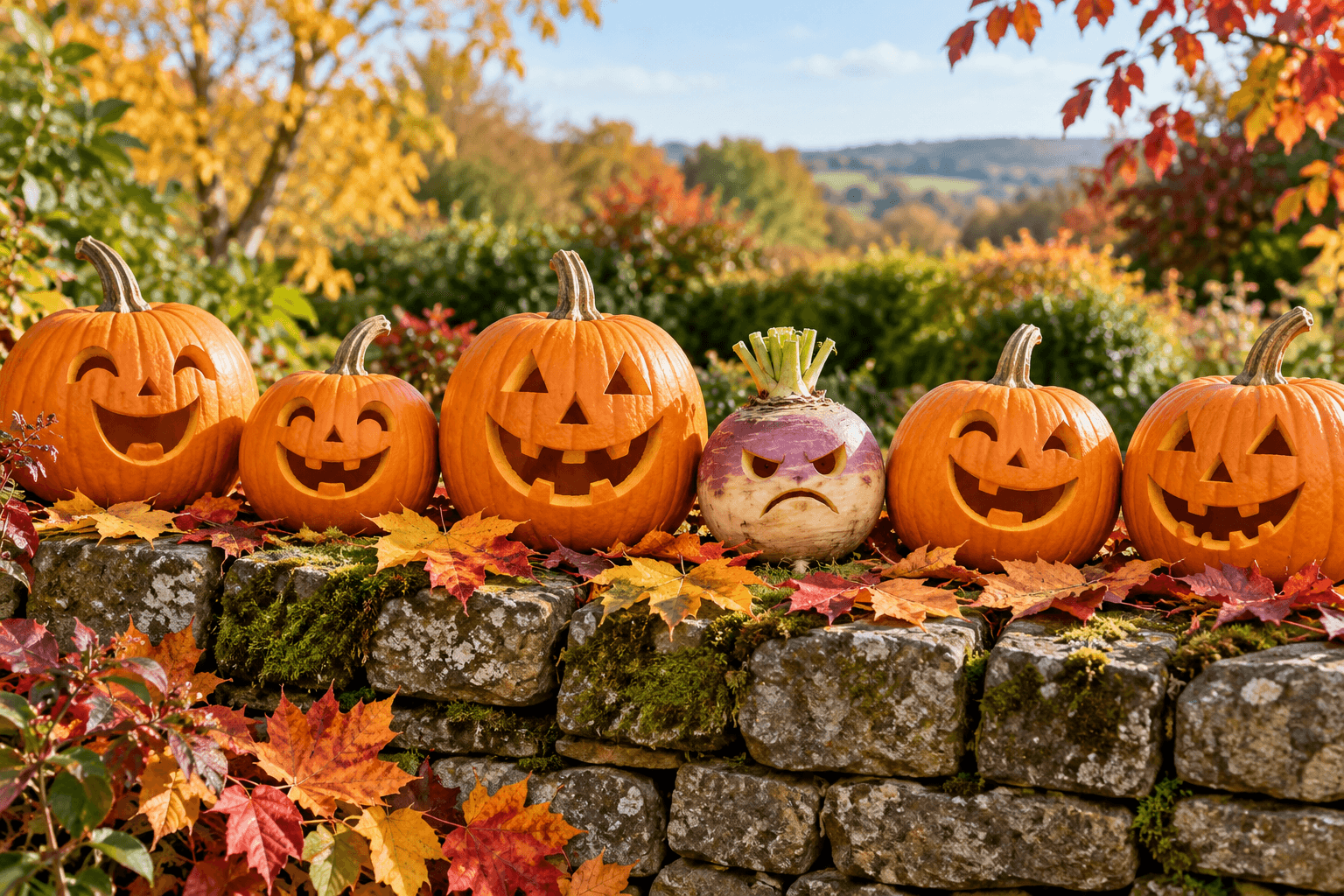
- Lanterns: Samhain had carved turnips (truly terrifying, have you ever seen one?). Halloween has pumpkins, which are much easier to carve and slightly less nightmare-inducing.
- Dressing up: In Ireland and Scotland, “guising” meant disguising yourself to blend in with the wandering spirits. Halloween turned that into trick-or-treating.
Old Samhain traditions you’ll recognise
Many Halloween favourites are much older than they look:
- Turnip lanterns. Long before pumpkins, people carved faces into turnips to scare off unwelcome spirits. If you ever want to feel sorry for your ancestors, try carving a turnip.
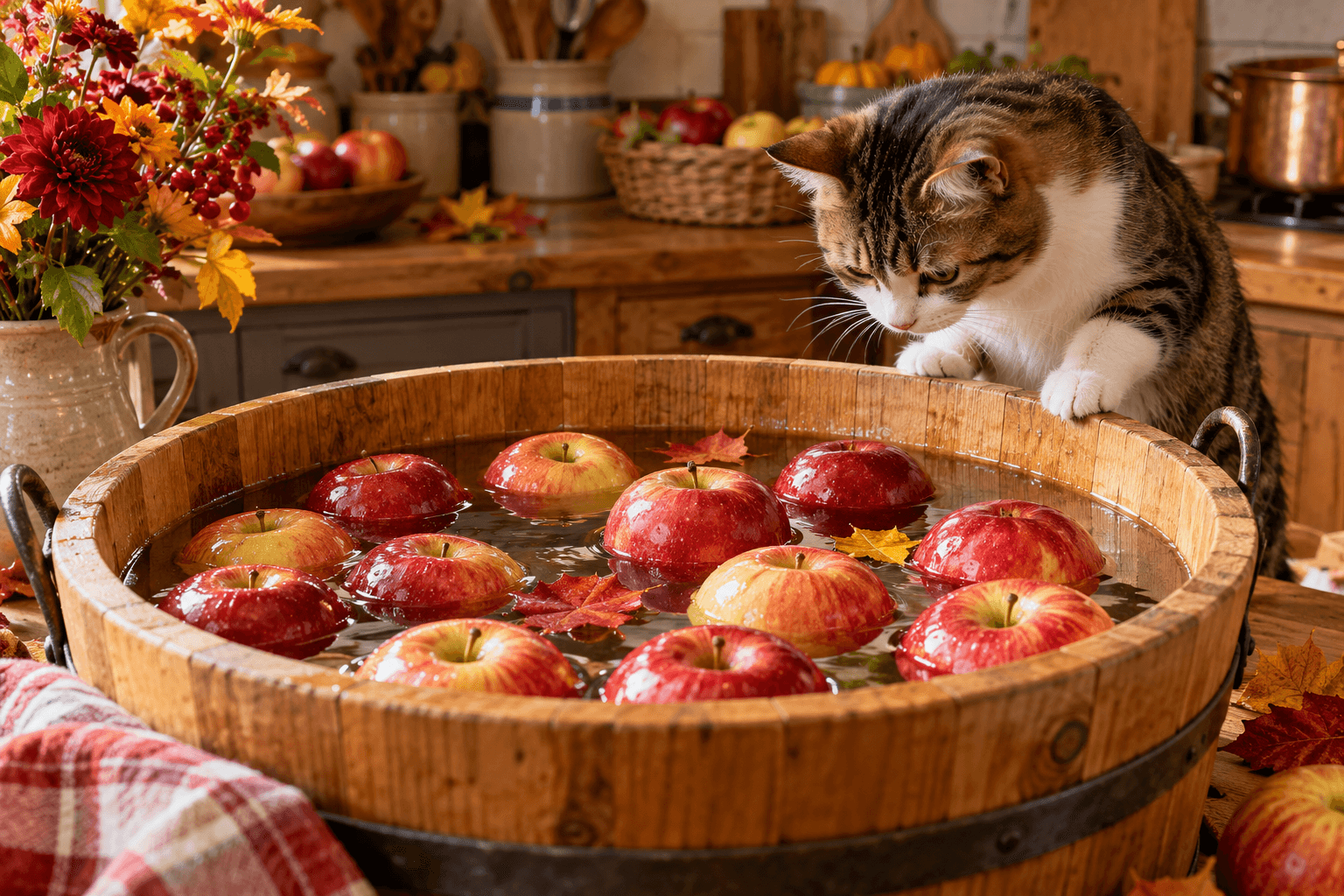
- Apple games. Bobbing for apples started as a harvest-time game, and apples were used in all sorts of light-hearted fortune-telling.
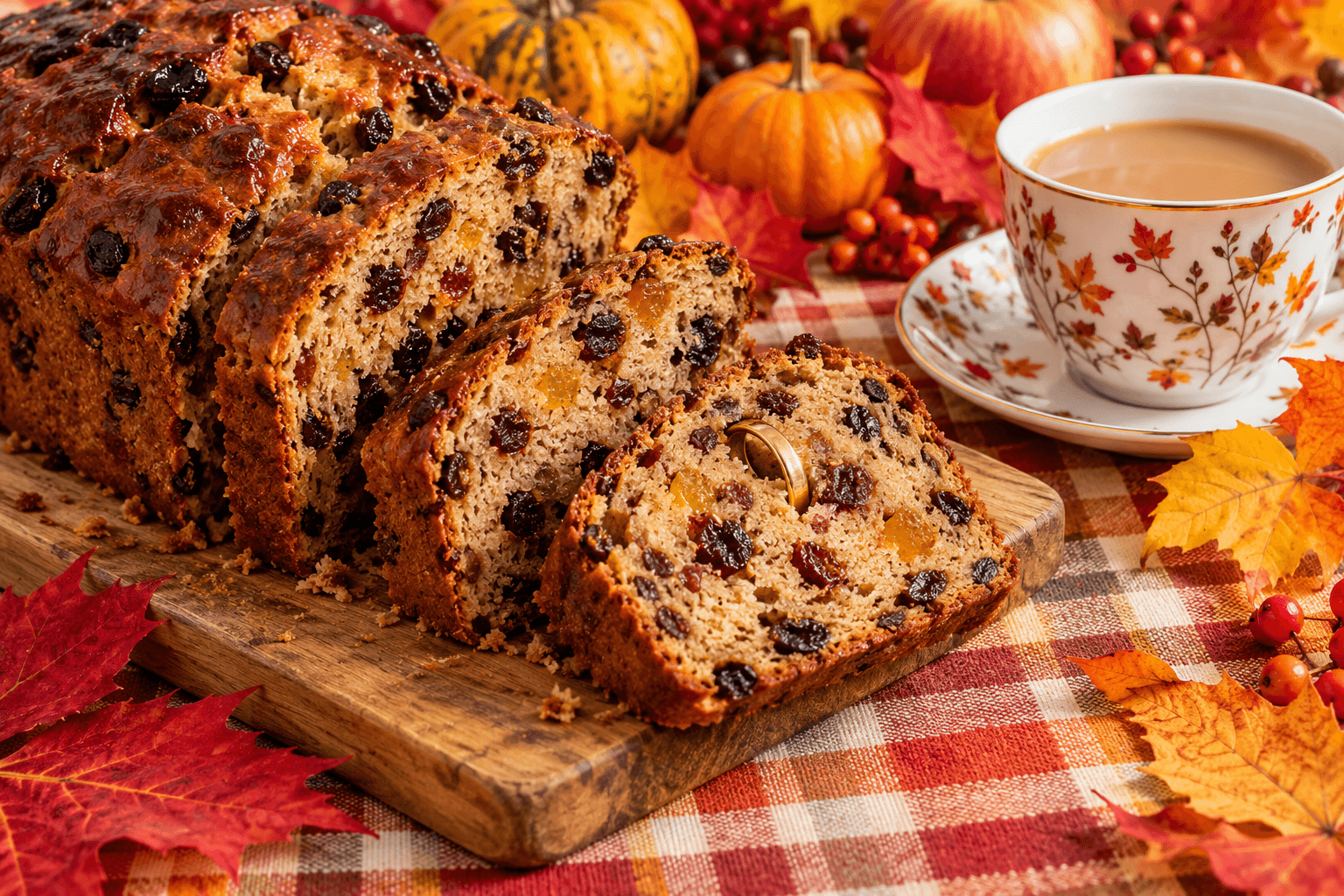
- Barmbrack. In Ireland, a fruity tea bread called barmbrack is baked with little charms hidden inside. Find the ring, and romance is said to be on its way. Find nothing, and you at least get cake.
- Remembering loved ones. Setting a place at the table or telling stories about family who have passed was a gentle part of the night.
How to celebrate Samhain and Halloween (without choosing)
You don’t have to pick a side. Here is my favourite way to have both in one evening:
- Afternoon: be a bit Samhain. Go for an autumn walk, collect a few leaves or conkers, and think about what this year has given you. A thank-you list over a cup of tea counts.
- Teatime: bake something. A barmbrack, an apple cake or simply buttered toast with cinnamon. Hide a coin in a muffin for an extra bit of fun (and warn your guests, for the sake of their teeth).
- Early evening: remember someone. Tell a favourite story about a grandparent or a friend who is no longer here. It is surprisingly comforting.
- Evening: be fully Halloween. Open the door to the little ghosts, put on a silly film, eat too many sweets. Balance is important.
Samhain, the Death card and the turning year
Samhain is all about endings that make room for new beginnings – which makes it the perfect night to meet the most misunderstood card in the tarot. Read the Death card, read slowly to see why it is far friendlier than it looks.
And if you love marking the seasons, Samhain is just the start. The next big date on the old calendar is the winter solstice, and I’ve written about it here: Yule Is Not Christmas. For the weeks in between, here are some gentle rituals to make autumn feel cosy instead of gloomy.
A few gentle questions
Is Halloween based on Samhain?
Partly, yes. Halloween grew from a mix of Samhain customs and the Christian feasts of All Saints’ and All Souls’ Day, then picked up plenty of new habits along the way.
Is Samhain still celebrated today?
Yes. Modern pagans celebrate it as a festival of the Wheel of the Year, and in Ireland and Scotland many old customs are still part of Halloween.
Is Samhain scary?
Not really. It is more thoughtful than spooky – a time to say thank you, remember loved ones and get ready for winter. The scary part is the turnip lanterns.
What do you eat at Samhain?
Seasonal, comforting food: apples, root vegetables, soups, nuts and bread. Barmbrack if you’re feeling traditional, chocolate if you’re feeling Halloween.
With warmth, Zeny
A little calm in your inbox
If you’d like a little more calm in your week, join the Zeny Lane newsletter. You’ll get gentle seasonal notes, new stories as they’re published, and free access to my Freebie Library of printable planners and gentle gifts.
No noise, no pressure. Just a quiet letter now and then.