The Death Card, Read Slowly: Why It’s Not What You Think
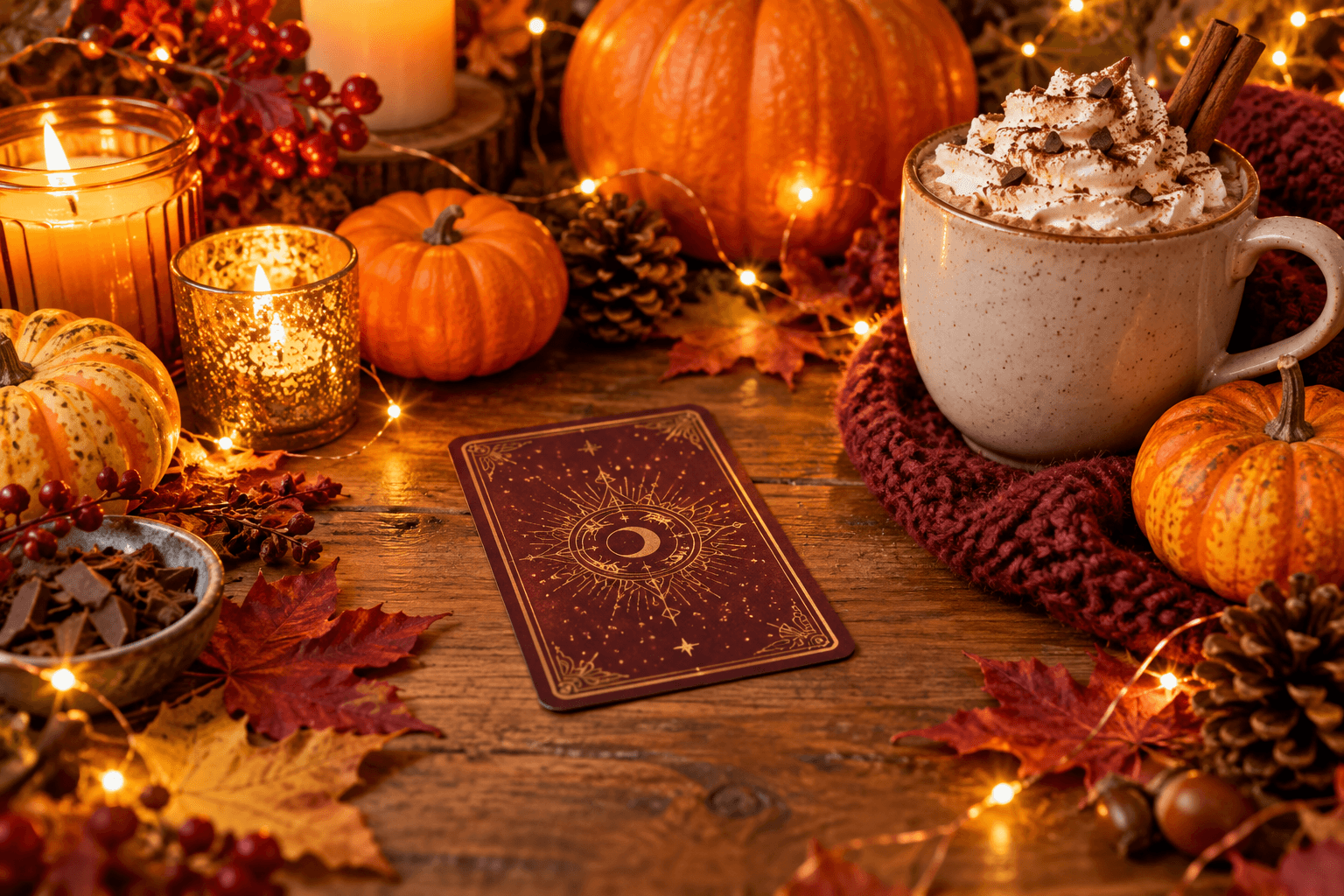
The Death card is the thirteenth card of the tarot’s Major Arcana, and despite its name, it almost never means physical death. It is the card of endings, change and transformation – one chapter closing so another can begin. Think less “grim reaper at the door” and more “autumn tidying up so spring has room to happen”.
I’ll admit it: the first time I saw this card, I nearly put the whole deck back in the drawer. A skeleton on a horse is not exactly a cosy evening companion. But once I sat with it (and a cup of tea, and a biscuit for courage), I found it was one of the gentlest cards in the pack. It just has a very dramatic outfit.
What does the Death card show?
In the classic Rider–Waite–Smith deck from 1909, the Death card is busy. Take a minute to look and you will usually spot:
- A skeleton in armour on a white horse, riding slowly, not galloping. Death is in no rush.
- A black flag with a white rose, a symbol of beauty and new life, even in the middle of change.
- People reacting in different ways: a king has fallen, a priest is praying, a child looks up without fear. Same change, very different attitudes.
- A sun on the horizon between two towers. Whether it is rising or setting is up to you – which is rather the point.
Not every deck is this theatrical. Some show a butterfly, a snake shedding its skin or falling leaves. The message stays the same: something is changing shape.
What does the Death card really mean?
Upright, the Death card means an ending that makes space for something new. A habit, a job, a season of life, a way of thinking – something is finishing, and that is not necessarily bad news.
Read gently, it says: let it go, it has done its job. Like clearing out a wardrobe, it can feel strange at first and wonderfully light afterwards.
What does the Death card reversed mean?
Reversed, Death usually points to change that is being resisted. You might be holding on to something that is already over – a routine, a grudge, a plan that no longer fits – because the unknown feels scarier than the familiar.
It can also mean a slower, quieter transformation happening under the surface. Either way, the card is not wagging a bony finger at you. It is just pointing out that the door is open whenever you are ready to walk through.
Is the Death card bad?
No, the Death card is not bad. It is probably the most misunderstood card in the tarot, mostly thanks to films where it is pulled with a dramatic gasp. In real readings it is about change, and change is how everything grows – including us.
If anything, it is a hopeful card. Nothing new can begin while everything old is still in the way.
How to read the Death card slowly
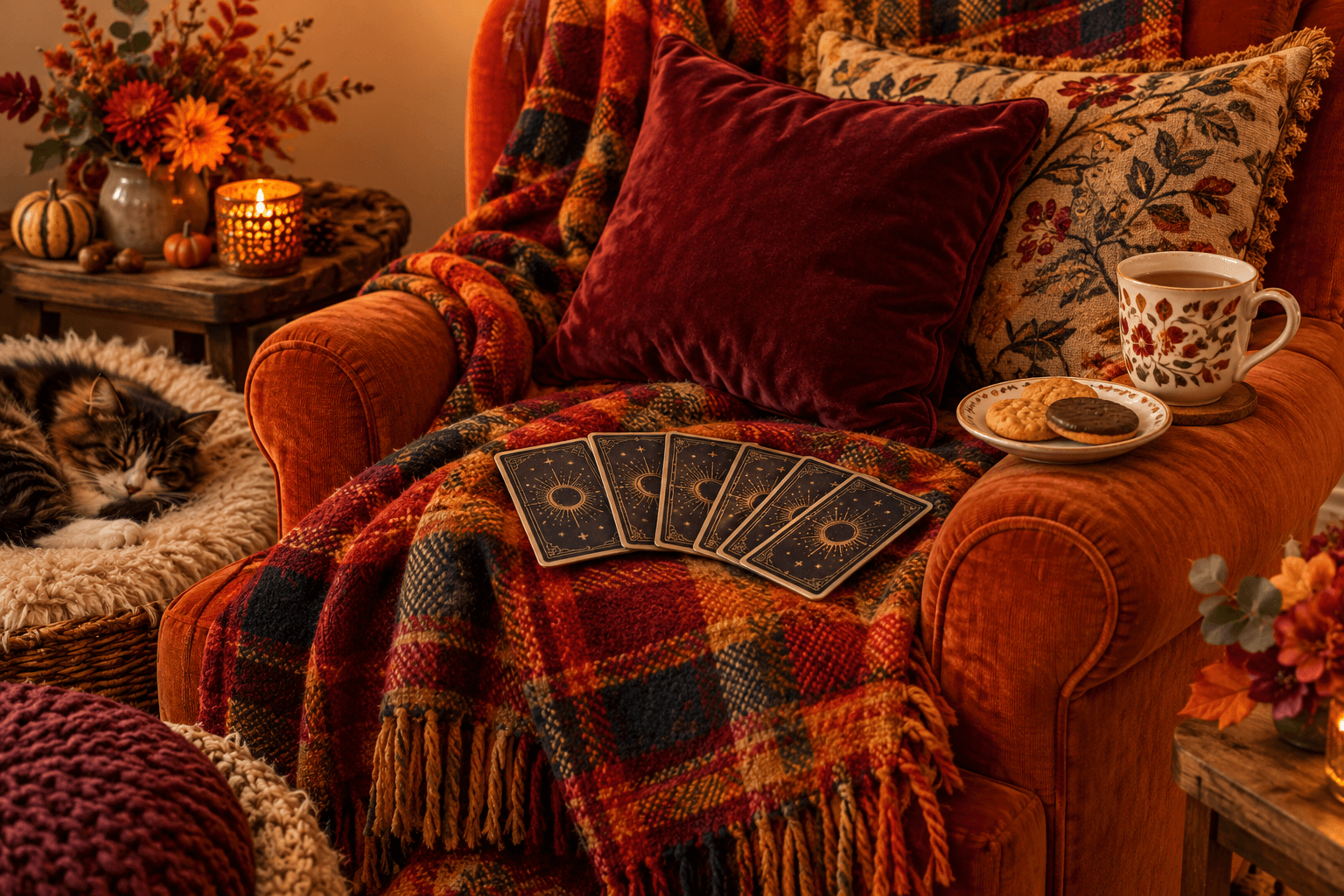
You don’t need any tarot experience for this. Give yourself fifteen minutes and a warm drink.
- Take the Death card out of the deck. No deck? A picture of the card works fine.
- Get comfy. Blanket, tea, maybe a candle. Make it the least spooky setting possible.
- Look for the hopeful details. Find the white rose, the sun, the child who isn’t afraid. Notice how much light there is in a card everyone thinks is dark.
- Name one ending. What in your life is already finishing, or ready to?
- Answer one prompt from the list below, for five minutes, without editing.
- Close with a welcome. Write one thing you would like to make room for now.
8 journaling prompts for the Death card
Choose one or two. Biscuits optional, but recommended.
- What in my life has quietly come to an end?
- What am I holding on to out of habit rather than love?
- Which old version of me am I ready to thank and say goodbye to?
- What would I do with the space if I let something go?
- Where am I the fallen king, and where am I the curious child?
- What change am I afraid of, and what is the smallest first step?
- What ending in the past turned out to be a beginning?
- What does my own “white rose” look like right now?
If you would like prompts like these to become a regular thing, my gentle 5-minute journaling ritual is a lovely place to start.
The Death card and autumn
There is a reason the Death card feels so at home at the end of October. Autumn is nature’s very own Death card: leaves fall, gardens rest, and nobody panics, because we all know spring is coming. Old traditions such as Samhain, the Celtic festival that gave us Halloween, celebrated exactly this moment – the turning of the year towards the dark.
So if this card turns up in October, it is right on schedule. Here are some gentle rituals to make autumn feel cosy instead of gloomy, and if you enjoy working with cycles, try my gentle new moon journaling ritual – every new moon is a tiny ending and a fresh start.
More cards to read slowly
If Death has made you curious about the rest of the deck, you might enjoy The Moon card, read slowly – another card that looks mysterious but is really about trusting yourself in the dark.
A few gentle questions
Does the Death card mean someone will die?
Almost never. In tarot it is about endings and transformation, not physical death. Most readers would never read it literally.
What does the Death card mean in a yes or no reading?
It is usually read as “no, not in its current form”. Something needs to end or change before the answer can become a yes.
What does the Death card mean in love?
It often points to a relationship changing – the end of one phase and the start of another. Sometimes that means moving on; sometimes it means growing into something deeper together.
What is the most important thing to remember about the Death card?
That every ending makes room. It is a card about clearing space, not losing everything.
With warmth, Zeny
A little calm in your inbox
If you’d like a little more calm in your week, join the Zeny Lane newsletter. You’ll get gentle seasonal notes, new stories as they’re published, and free access to my Freebie Library of printable planners and gentle gifts.
No noise, no pressure. Just a quiet letter now and then.