Cooking for One Without Wasting Food
Cooking for one without wasting food gets much easier when you plan your meals for the week and shop from a list. The freezer takes care of most leftovers, from half-used herbs to spare bread. And the simplest rule of all: stop buying food you don’t enjoy, even when you feel you should.
I live on my own with my cat, Shelby, and I work full time, so my kitchen runs on a handful of small habits I can keep up after a long day at work. They work just as well in a studio flat as in a shared kitchen where you get one shelf in the fridge.
Why does cooking for one create so much waste?
Most food is packed and priced for families. Carrots come in kilo bags, and most recipes are written for four people. Multibuy offers make it harder still: two packs for a lower price feels like a win until the second one goes soft at the back of the fridge.
So the trick is to shop and cook for the week you’re really going to have, with your own appetite and your own schedule.
How do you plan meals for one person?
Write a simple menu for the week before you shop. I think about what I’d like to eat over the next seven days, check what I already have in the cupboards, and only then write my shopping list. After a couple of weeks, a plan shows you what suits you: how much you really eat and which nights you’re too tired to cook.
My plan is flexible. What I cook depends on what I fancy and how much time I’ve got. Some evenings that means breakfast for dinner, and when I have a free afternoon I’ll try something more involved. My Sunday reset for one includes cooking for the next two days.
A few things make a weekly plan work for one:
- Use the same ingredient twice. Half a bag of spinach can go into pasta on Monday and an omelette on Wednesday.
- Leave one or two nights free for leftovers or something from the freezer.
- Keep a couple of easy meals for tired evenings, like eggs on toast or a quick stir-fry with frozen veg.
- Start small. If a full week feels like a lot, plan three dinners and see how it goes.
If your weeknights after work feel rushed, my slow evening routine for when you work full time has ideas for making a little room for dinner.
How do you shop for one without overbuying?
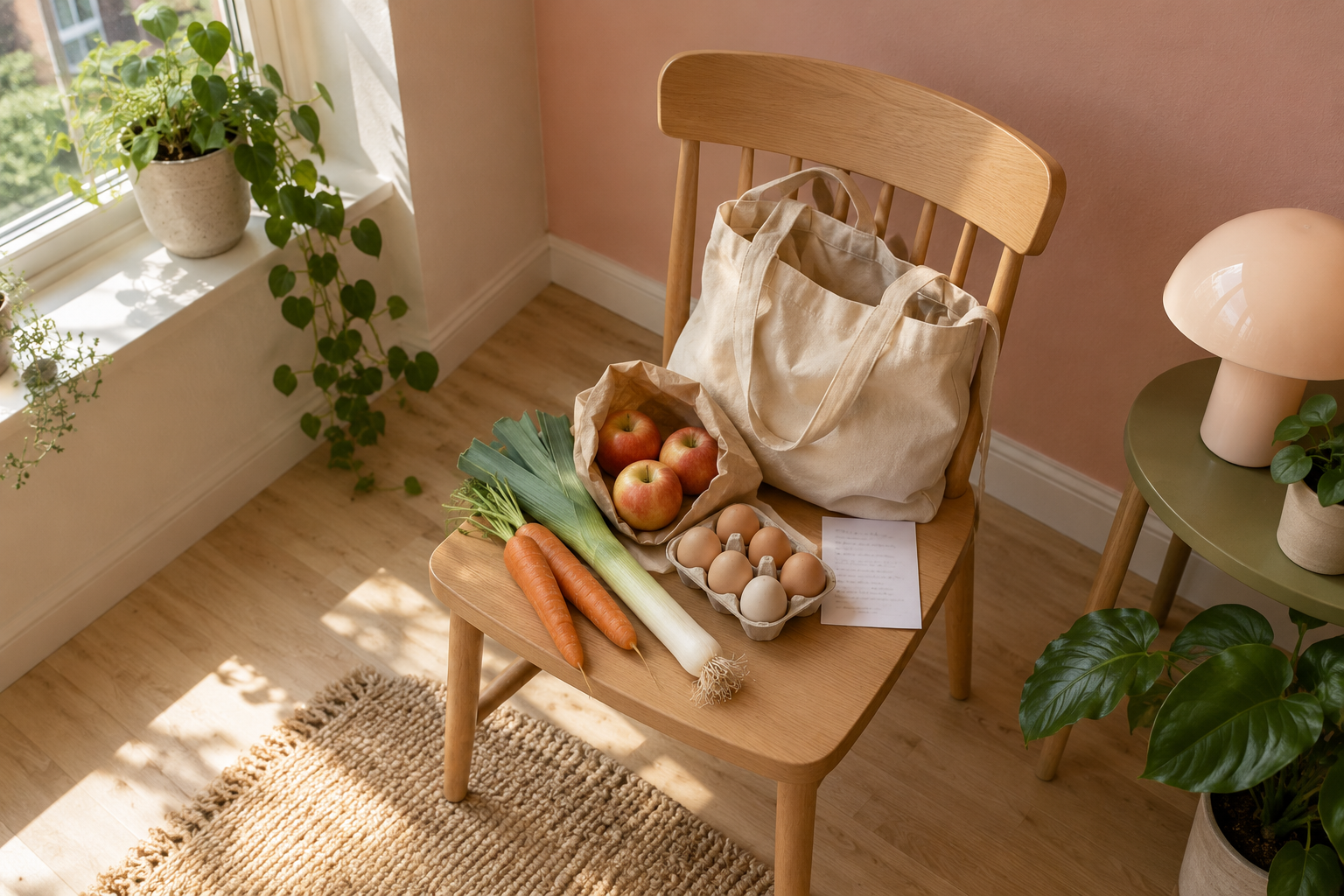
Shop from a list, every time. I always write down what I need before I go, and I look at discounts and coupons too. A deal only saves money if the food gets eaten, though.
- Check the fridge and cupboards before you write the list.
- Buy loose fruit and veg, so you can take two carrots instead of a whole bag.
- Use coupons and offers for things that are already on your list.
- Before you pick up a multibuy, ask yourself whether you can freeze the second pack. If you can’t, leave it on the shelf.
- Reduced-price stickers are great for food you’ll eat that evening or freeze the same day.
For more ways to keep your food shop small, my post on slow living on a budget with a no-spend weekend plan has a full weekend of ideas that cost almost nothing.
Stop buying food you don’t like
This rule has saved me more food than any storage trick: if I buy something and end up throwing it away, I don’t buy it again. Nobody is making you fill your kitchen with food you don’t enjoy.
Tomatoes are my example. I don’t like them, but someone I used to live with loved them, so there were always tomatoes in the fridge. After they moved out, I bought them once or twice out of habit. I ate them without enjoying them much, and I haven’t bought any since.
A lot of what ends up in the bin is food we think we should eat. Look back at the last few things you threw away. If the same food keeps turning up, let it go and buy something you’ll look forward to.
What can you do with half an onion?
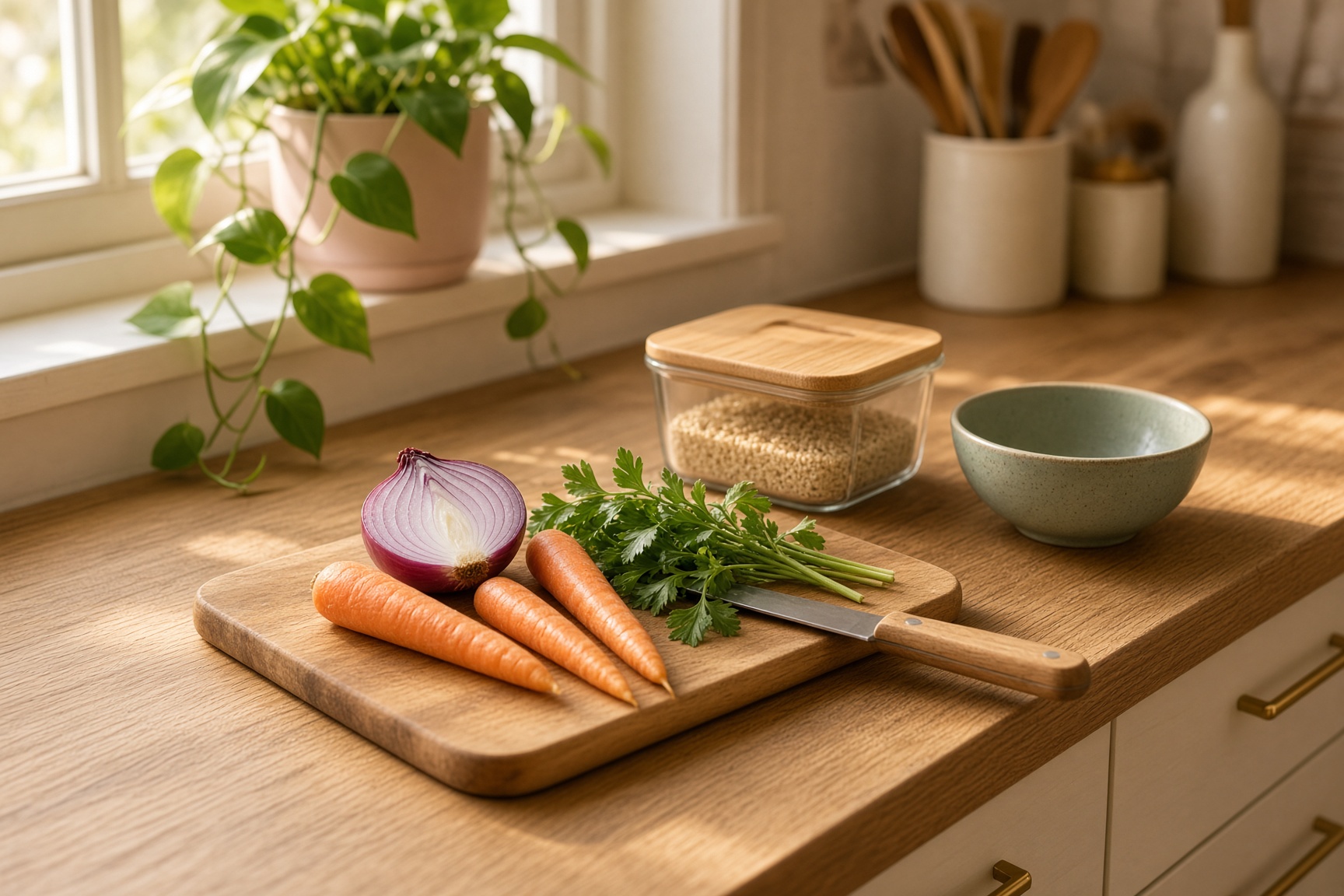
Put it in a small container with a lid, keep it in the fridge and use it within a couple of days, in a sauce or the next night’s dinner. That’s what I do, and the same idea works for lots of half-used ingredients.
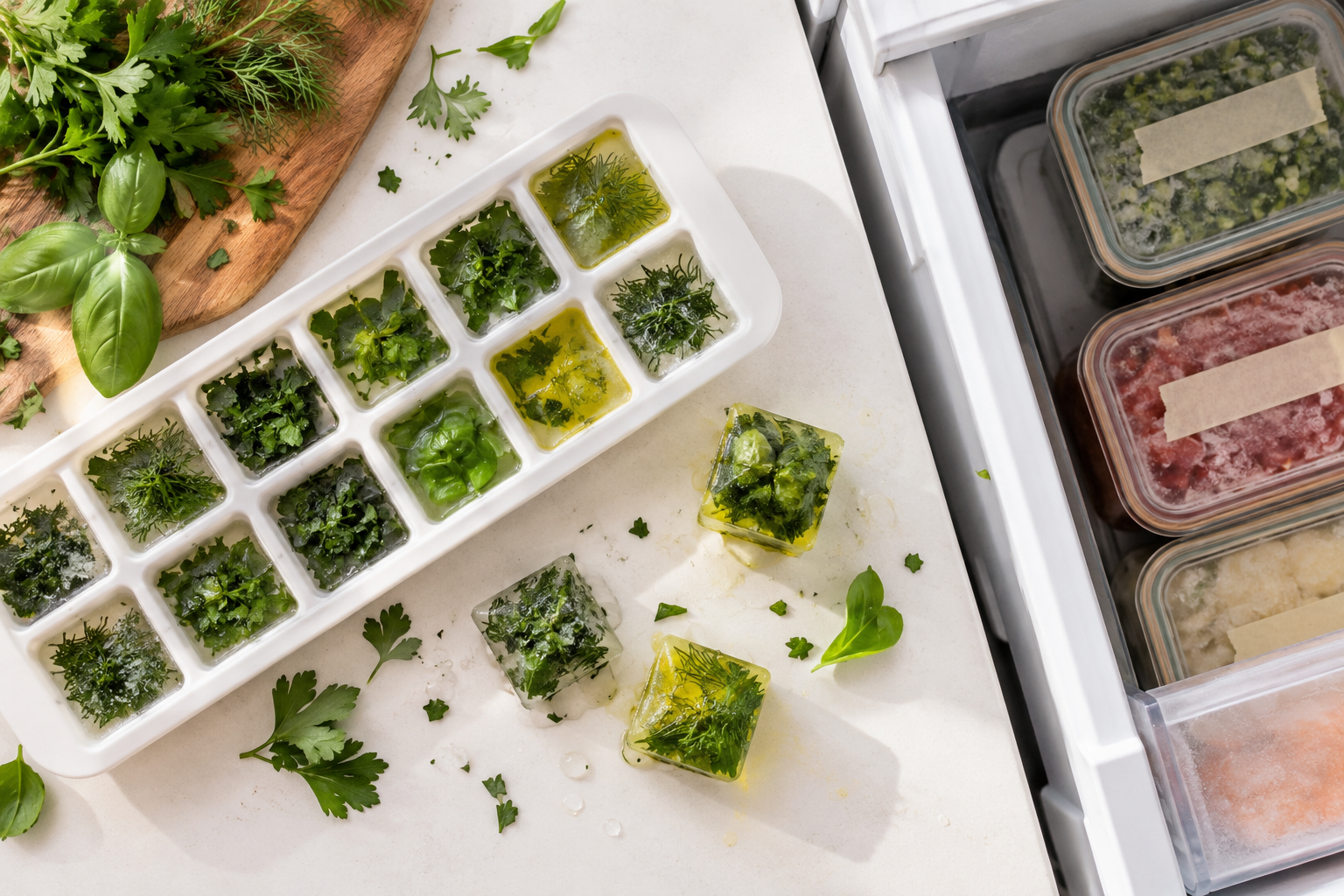
- Fresh herbs: chop them and freeze them in an ice cube tray with a little water or oil. Drop a cube straight into a pan or a soup.
- Half a tin of beans or coconut milk: spoon what’s left into a covered container and keep it in the fridge. Opened tins shouldn’t go in the fridge as they are.
- Bread: keep the loaf in the freezer and toast slices straight from frozen.
- Odd bits of veg: at the end of the week, turn them into a soup or a stir-fry.
Sweet things can be made for one too. My stovetop cinnamon rice pudding for one makes a single bowl, so there’s nothing left to go stale.
What can you freeze when you live alone?
For me, the freezer is the easiest way to stop food going to waste. It gives you time: whatever you can’t eat this week can wait until you’re ready for it.
- Sliced bread, rolls and wraps
- Single portions of soup, chilli or curry, cooled first and frozen in small containers
- Grated cheese, ready to sprinkle from frozen
- Ripe bananas, peeled and halved, for baking or smoothies
- Chopped onion and peppers for quick cooking
- Herb cubes, made as above
Label everything with what it is and the date. A strip of masking tape and a pen is enough. You can freeze most food right up to its use-by date, and cooked leftovers taste best if you eat them within about three months. Once something is defrosted, eat it within 24 hours and don’t freeze it again.
If you’ve just moved into your first place, my living alone for the first time checklist covers the basics to sort out in your first weeks.
What’s the difference between use-by and best-before?
Use-by dates are about safety, and best-before dates are about quality. I work in food quality, so this is the label I’d love everyone to understand:
- Use by: eat, cook or freeze the food by the end of this date. After that it can be unsafe, even if it looks and smells fine.
- Best before: the food is usually still safe after this date if you’ve stored it properly, though it may be a little less fresh. Check it before you eat it.
- Storage instructions such as “eat within 3 days of opening” still apply, and the use-by date wins if it comes first.
Knowing the difference means you can stop throwing away good crisps and biscuits, while still taking care with chilled food like meat and fish.
A few questions
How many days can I keep leftovers in the fridge?
The UK Food Standards Agency advises eating leftovers within two days, or within one day for rice dishes. Cool them and get them into the fridge quickly. If you can’t eat them in time, freeze them.
Is it cheaper to cook for one than to buy ready meals?
Usually, yes, especially with simple basics like pasta, eggs, rice and frozen veg, and when nothing ends up in the bin. A ready meal in the freezer is still handy for evenings when you can’t face cooking.
What’s the easiest way to start meal planning for one?
Plan three dinners for the coming week and shop only for those. Once that feels easy, add lunches or a fourth dinner.
Cooking for one can be one of the small pleasures of living alone. You eat what you fancy, in portions that suit you. Start with one habit this week, maybe a shopping list or a tray of frozen herbs, and build from there.
If you’d like more small ideas for living on your own, Join the newsletter for free printables and new posts.
This post is part of my living alone series. You’ll find every article in one place in How to Enjoy Slow Living When You Live Alone.
With warmth, Zeny