Slow Living on a Budget With a No-Spend Weekend Plan

Slow living on a budget starts with the things that already cost nothing: time, a walk, the library, a pot of tea and whatever is sitting in your drawers. Most of what makes a slow life feel rich runs on attention, so a small budget leaves plenty of room for it.
My favourite weekends cost almost nothing. Tea in the morning, a book or some soft music, a simple lunch from whatever is in the fridge and an old film in the evening, with my cat close by. Here’s how I do it, plus 20 free ideas you can borrow.
What does slow living on a budget mean?
It means choosing to spend your time well before you spend your money. Slow living is about noticing your days and doing fewer things with more care, and none of that needs a shopping trip.
The pictures online can make it look expensive, with linen bedding and handmade mugs in every shot. Those things are lovely, and you can skip them entirely. A chipped mug of tea by the window counts just as much.
Start with what you already have
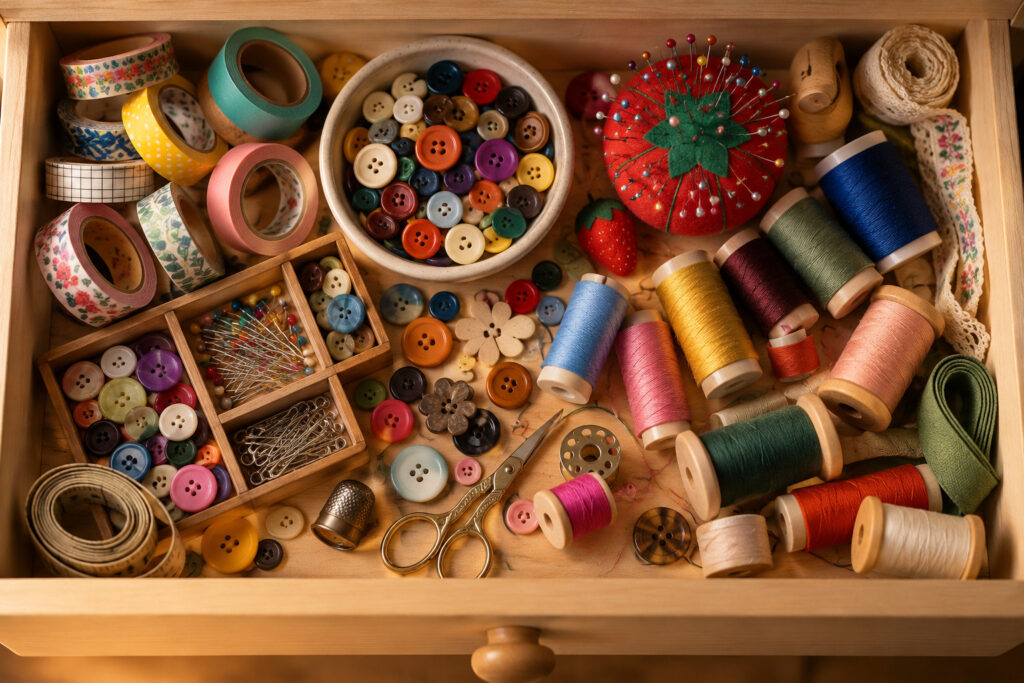
Before you buy anything new, have a look at what’s already in your home. I did this recently and found fifteen rolls of tape and a whole box of sewing supplies, even though I don’t sew very often. Somewhere along the way, they had quietly multiplied.
A few habits help:
- Shop your own drawers and cupboards before you go to the shops.
- Keep a 30-day list. Write down what you want to buy and look at it again a month later. Often the wish has passed.
- Use one thing up before you open the next, whether it’s tape, notebooks or shampoo.
- Cook from what’s in the fridge first, and plan the next shop around what’s left.
Setting up your first home? My living alone checklist covers what you need and what you can skip.
20 free ways to make everyday life feel richer
At home
- Make a proper pot of tea and drink it sitting down, away from your phone.
- Put on music while you potter: an old CD, the radio or a playlist you already have.
- Reread a book you loved years ago.
- Rearrange one corner of a room. My guide to a cosy reading corner in a small home uses things you probably already own.
- Write a letter or a card to someone and post it.
- Journal for five minutes. If you’d like it to stick, here’s how to make journaling a habit.
- Watch an old film you own or one that’s on free TV.
- Clear out a single drawer and rediscover what’s in it.
- Spend unhurried time with your pet.
- Go to bed early with a book and a hot water bottle.
Outside
- Take a walk with no destination and no podcast.
- Join your local library. Besides books, many libraries lend e-books, audiobooks and magazines through an app, and many run free events.
- Visit a free museum or gallery. Many in the UK charge nothing for their permanent collections.
- Find a bench in a park and sit for ten minutes.
- Bring the season inside with a few fallen leaves, pine cones or a bare branch in a jar.
- Look out for book swaps and little free libraries near you.
For your mind and your people
- Learn something new from a free online course or a library app.
- Call someone you love for no particular reason. If phone calls feel hard, these ideas for calling family when you live alone might help.
- Write down a few small things that went well this week.
- Do nothing for ten minutes. Sit, look out of the window and let your mind wander.
My no-spend weekend at home
A no-spend weekend is two days when you buy nothing beyond what you planned, living on what you already have. Here’s what mine looks like.
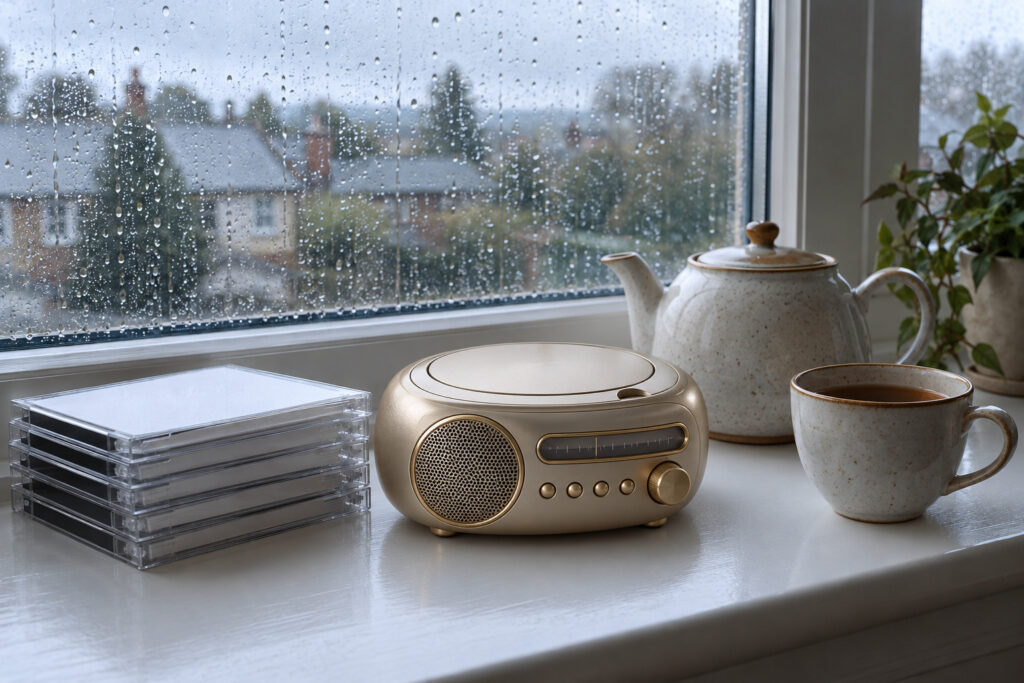
- Morning: I make tea first, then pick up a book or switch on my CD player with some soft, slow music.
- Lunch: something simple from whatever the fridge has to offer.
- Afternoon: a walk, or a trip to the library to swap my books.
- Evening: an old film and some quiet time looking after my cat, which is one of the nicest parts of the day.
To plan your own:
- Decide on Friday that the weekend will be a no-spend one.
- Check the fridge and cupboards and plan a few easy meals.
- Choose a book, a film and a walk in advance, so boredom doesn’t send you shopping.
- Allow one small planned treat if it helps, like a special tea you already have.
How to spend less without feeling deprived
Spending less feels easier when you notice what you already have. A slow morning with tea and music is a pleasure in itself, and it’s worth enjoying on purpose.
- Unsubscribe from shop newsletters and sale alerts.
- Notice what you tend to over-buy. For me it’s tape and sewing bits. For you it might be mugs or notebooks.
- Turn it into a small challenge, like using up every notebook before buying the next.
- Keep a list of your favourite free things on the fridge for restless days.
A few questions
Is slow living expensive?
It doesn’t have to be. Most slow living habits, like walking, reading, simple cooking and rest, cost little or nothing. The expensive part is usually the look, and you can happily do without it.
What is a no-spend weekend?
A weekend when you only use what you already have at home, apart from essentials you planned. It’s an easy way to reset your spending and rediscover free pleasures.
What can I do at home for free?
Read, journal, cook from your cupboards, rearrange a room, watch an old film, write a letter or spend time with your pet. The list above has 20 ideas to start with.
If you’re new to all this, Slow Living for Beginners has 12 small changes to start with.
And if you’d like a simple way to keep track, my free Slow Living Tracker is waiting in the Zeny Lane Freebie Library. Join the newsletter to get it, along with my other printable gifts.
With warmth, Zeny