Yule Is Not Christmas: A Candle, a Loaf and the Dark
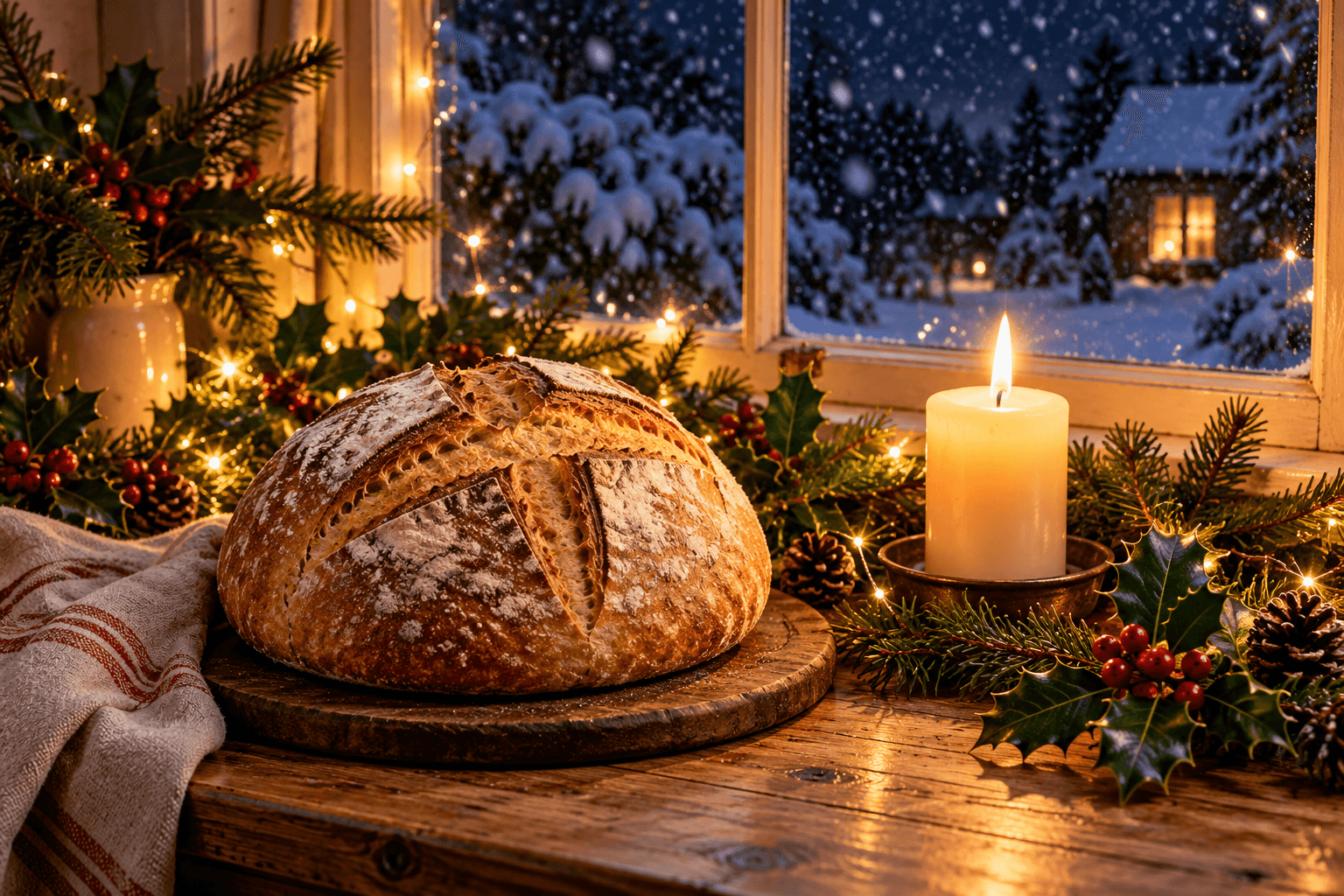
Yule is the old midwinter festival of the winter solstice, the longest night of the year, which falls around 21 December in the UK and the US. It celebrates one simple, wonderful thing: from that night on, the days start getting longer again. Christmas borrowed a lot from it – the evergreens, the candles, the log by the fire – but Yule itself is not about presents or church. It is about the dark, the light coming back, and having a very good excuse for something warm to eat.
I love Christmas, truly. But every year, just before the wrapping paper chaos begins, I like to give the solstice its own little evening. No robes, no chanting, no standing in a field at dawn (unless you want to). Just a candle, a loaf and the dark.
What is Yule, in plain words?
Yule is a midwinter festival that goes back to the Germanic and Norse peoples of northern Europe, long before Christmas arrived. The Old English word for it was “geol”, and the name hung around so stubbornly that we still say “Yuletide” in carols today.
Historians argue about a lot of the details – our ancestors were rubbish at writing things down – but the heart of it is clear. In the coldest, darkest part of the year, people gathered, lit fires, feasted and reminded each other that the sun was on its way back. Honestly, it sounds like a very reasonable plan for December.
Yule vs Christmas: what is the difference?
The short answer: Christmas is a Christian celebration of the birth of Jesus on 25 December. Yule is an older seasonal celebration of the solstice, around 21 December. Over the centuries they got so tangled up that it is hard to tell where one ends and the other begins.
Here is a fun little list of Christmas things with very Yule-ish roots:
- Evergreens. Bringing green branches indoors in midwinter was a way of saying “life carries on”. Your Christmas tree is basically a very glamorous version.
- The Yule log. Families once burned a big log in the fireplace through the festive season. Today most of us prefer the chocolate version, which is easier to fit through the door.
- Candles and lights. On the longest night, every flame was a tiny act of hope. Fairy lights count. I checked.
- Feasting. Midwinter has always been a good time to eat well, gather together and pretend the cold doesn’t exist.
When is Yule?
Yule is celebrated on the winter solstice, which usually falls on 21 or 22 December, depending on the year and where you live. Some people celebrate just that night; others stretch the festivities over twelve days. If you ask me, any celebration that comes with extra days is a good one.
A quick search for “winter solstice date” will give you the exact day for your year.
A candle, a loaf and the dark: a simple Yule ritual
This is my favourite way to mark the solstice. It takes one evening, costs almost nothing, and the main ingredient is a bit of darkness.
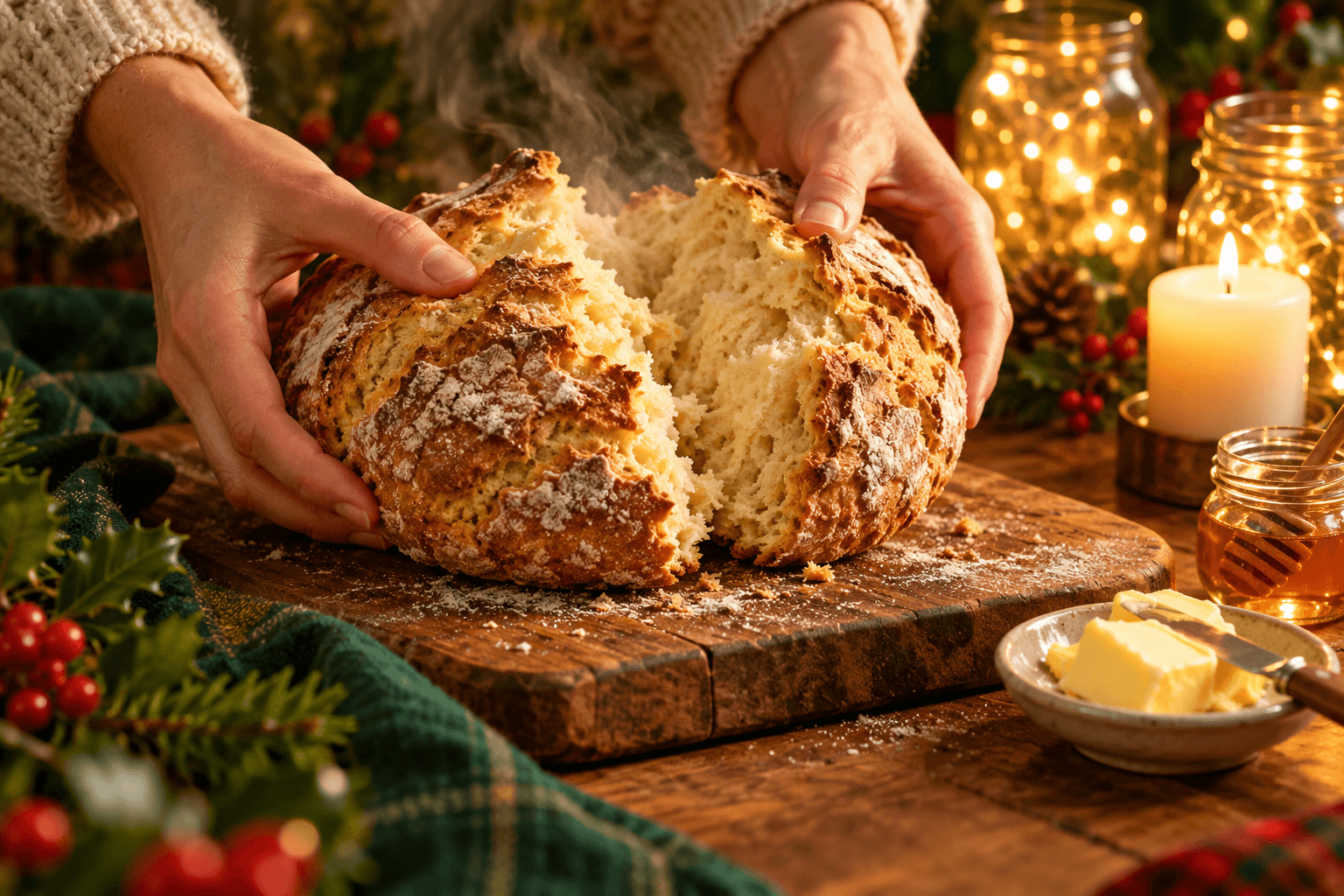
- Bake a loaf in the afternoon. The kitchen gets warm, the house smells wonderful, and you have something to share later. A quick soda bread (recipe below) is perfect, but any bread will do – even a shop-bought one, warmed in the oven. I won’t tell.
- Turn off the lights at dusk. Switch off the lamps, the telly and the fairy lights. Sit in the dark for five minutes. It feels strange at first, then surprisingly peaceful.
- Light one candle. Just one. Watch how much brighter the room feels. That is the whole point of Yule in a single flame.
- Break the bread. Tear the loaf by hand, with butter, honey or cheese. Share it with whoever is with you – a partner, a friend, a very interested cat.
- Say one thing you are letting go of, and one thing you are welcoming back. Out loud, written down, or just in your head. Then turn the lights on, slowly, one by one.
If you would like a deeper version, a little journaling fits beautifully here. My gentle new moon journaling ritual has prompts that work just as well on the longest night.
A quick Yule soda bread
Soda bread needs no yeast and no waiting, which makes it the friendliest loaf for a busy December. You need:
- 500 g plain flour (about 4 cups)
- 1 tsp bicarbonate of soda (baking soda)
- 1 tsp salt
- 400 ml buttermilk (about 1⅔ cups)
- Optional: a handful of oats, a spoon of honey, or some dried cranberries for a festive touch
Heat the oven to 200°C (180°C fan, 400°F). Mix the dry ingredients, pour in the buttermilk and stir into a soft, shaggy dough. Shape it into a round on a floured tray and cut a deep cross on top. Bake for 30–35 minutes, until it sounds hollow when you tap the bottom. Let it cool a little – if you can.
More cosy ways to celebrate Yule
If one candle feels a bit modest, here are a few cheerful extras:
- Bring in some greenery. A few sprigs of holly, ivy or pine in a jar make the table feel instantly festive.
- Watch the sunrise or sunset. The solstice sun rises late and sets early, so you don’t even need to get up very early to catch it.
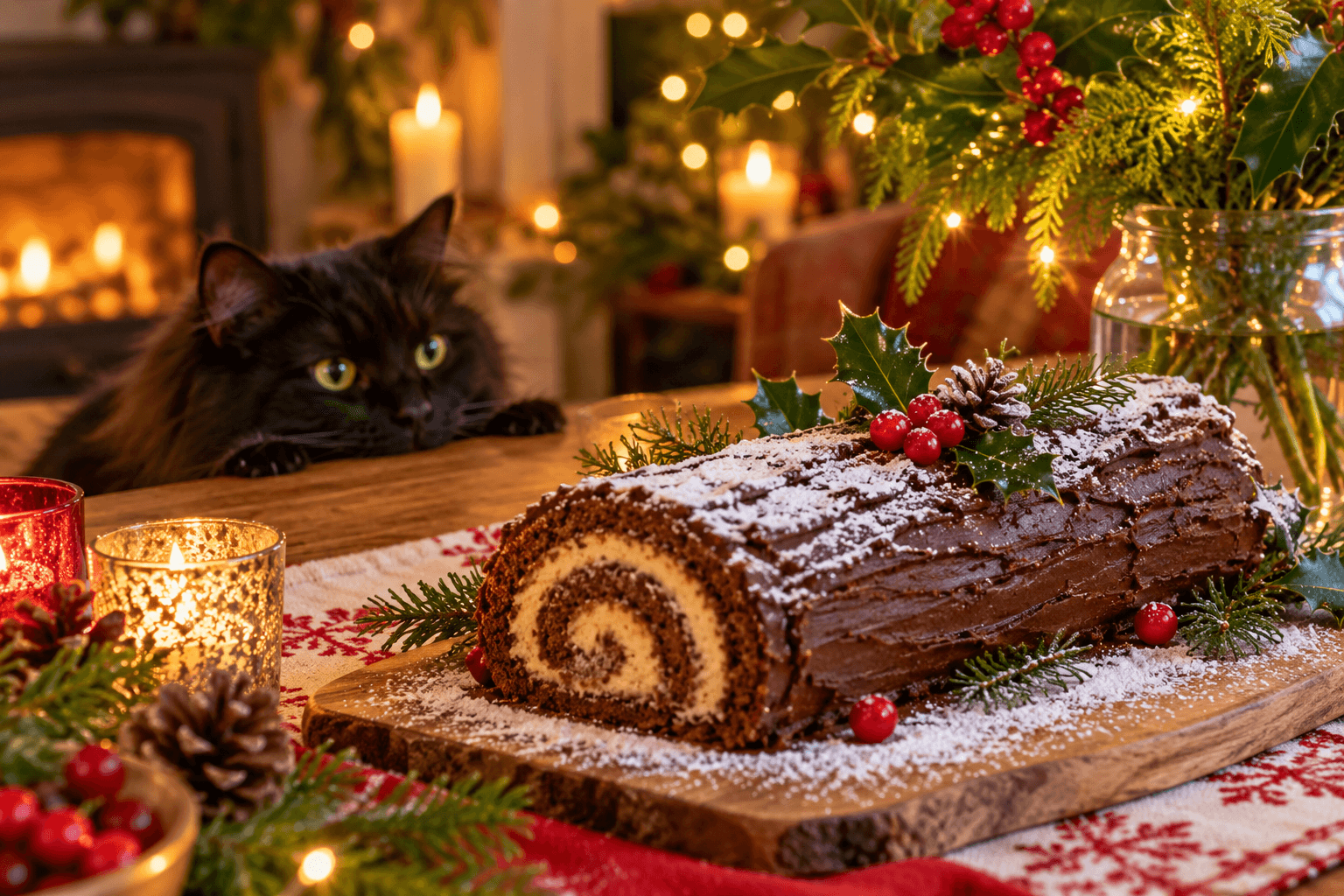
- Make a tiny Yule log. A chocolate roll with a forkful of icing “bark” counts as tradition and dessert at the same time.
- Read something by candlelight. A winter story, a poem, or The Moon card, read slowly if you fancy something a little mystical.
- Have a gentle night in. Yule is lovely on your own, too. Here are some ideas for a quiet Christmas on your own or with just a few people.
Why Yule is the perfect pause before Christmas
By 21 December, most of us are running on mince pies and to-do lists. Yule gives you permission to stop for one evening before the big day and simply sit with the dark and the light. It is less about doing more and more about noticing.
If December is already feeling full, my guide on how to get through December without losing yourself might help. And if you would like somewhere calm to plan the season, my free Slow Christmas Planner is waiting for you when you join the Zeny Lane newsletter – you can find it in Your Christmas, Your Way.
A few gentle questions
Is Yule a pagan holiday?
Yes, Yule has pre-Christian roots, and today it is celebrated by modern pagans as one of the eight festivals of the Wheel of the Year. But you don’t need to follow any tradition to enjoy a solstice candle and a warm loaf.
Can I celebrate Yule and Christmas?
Of course. Many people do both – Yule on the solstice for a quiet evening, Christmas a few days later for the noisy, happy part.
What do you eat at Yule?
There is no official menu. Bread, roasted vegetables, spiced drinks, cheese and anything warm and comforting all feel right. And a chocolate Yule log, obviously.
What colours are associated with Yule?
Green for evergreens, red for berries and warmth, and gold or white for the returning sun.
Looking for more cosy Christmas ideas? Explore all Christmas stories here.
With warmth, Zeny
A little calm in your inbox
If you’d like a little more calm in your week, join the Zeny Lane newsletter. You’ll get gentle seasonal notes, new stories as they’re published, and free access to my Freebie Library of printable planners and gentle gifts.
No noise, no pressure. Just a quiet letter now and then.