How to Make Journaling a Habit: A Gentle 5-Minute Ritual

The easiest way to make journaling a habit is to make it smaller than you think it should be. Write three lines, at the same moment each day, in a notebook you don’t mind being messy, and let that be enough. A journal you open for five quiet minutes will serve you far better than one you mean to fill for an hour and never touch.
I say this as someone with a drawer of beautiful notebooks, each with about eleven pages used. For years I treated journaling like a test I kept failing. What finally changed it wasn’t more discipline. It was letting it become a small, cosy part of the evening, like putting the kettle on.
Why is it so hard to keep a journal going?
Most journals are abandoned because we start them with too much ambition. We picture long, thoughtful entries every night, and the first time we’re tired and write two sentences, it feels like we’ve already broken something.
There’s also the blank page itself. An empty spread can feel oddly demanding, as if it expects wisdom. On an ordinary Tuesday, you may simply not have any, and that’s perfectly fine.
So the answer isn’t to try harder. It’s to lower the doorstep until stepping over it takes no effort at all.
How long should you journal each day?
Five minutes is plenty, and three lines is a complete entry. That’s the whole rule I follow now:
- Line one: something that happened today, however small.
- Line two: how it felt, in plain words.
- Line three: one thing I’d like to carry into tomorrow.
Some nights those three lines turn into a page, because once the pen is moving, more tends to follow. Other nights they stay three lines. Both count. The habit lives in the opening of the notebook, not in how much ink ends up on the paper.
When is the best time to journal?

The best time is attached to something you already do without thinking. New habits hold far better when they lean on an old one, so instead of choosing a time on the clock, choose a moment in your day.
Mine is the kettle. While my evening tea steeps, the notebook comes out, and by the time the tea is ready to drink, the lines are written. Other gentle anchors that work well:
- the first sip of your morning coffee
- drawing the curtains as it gets dark
- the few minutes after you get into bed, before the phone comes out
- coming back in from an evening walk
If you already have a few small anchors in your day, like the ones in my gentle daily rituals for a calmer day, tuck your journal in beside one of them.
What should you write about when your mind goes blank?
Keep a handful of prompts on the inside cover so you never have to invent a topic when you’re tired. These are the ones I return to most as the evenings draw in:
- What was the cosiest moment of today?
- What did I notice outside: a colour, a smell, the light?
- What am I quietly looking forward to this week?
- What can I let go of before tomorrow?
- Who made today a little kinder, and did I tell them?
If you enjoy tarot, a daily card makes a good prompt. Here’s how I journal with tarot cards every day.
That last one has a way of turning into a note or a card. It’s the same idea behind giving kind words as a Christmas gift: the things we notice about people are often worth saying out loud.
Seasonal prompts help too. Autumn is a lovely time to begin, because the darker evenings give journaling a natural home indoors. If this season tends to feel heavy for you, my gentle rituals for making autumn feel cosy pair nicely with a notebook.
Do you need a special notebook?
No, and a very precious notebook can actually get in the way. If it feels too lovely to spoil, you’ll hesitate every time you open it.
Choose something that sits comfortably in your hand and that you’re happy to scribble in. Leave it somewhere you’ll see it, near the kettle or on the bedside table, never tidied away in a drawer. A pen that lives with it saves a surprising amount of friction.
What if you miss a few days?
Simply begin again, with no apology to the page. Missed days are part of every real journal, not proof that you’ve failed at it.
When I come back after a gap, I write one line: “Welcome back.” Then I carry on with today, not with everything I missed. There’s no need to catch up. A journal isn’t a record you owe anyone; it’s a quiet place that waits for you.
Making it a ritual rather than a task
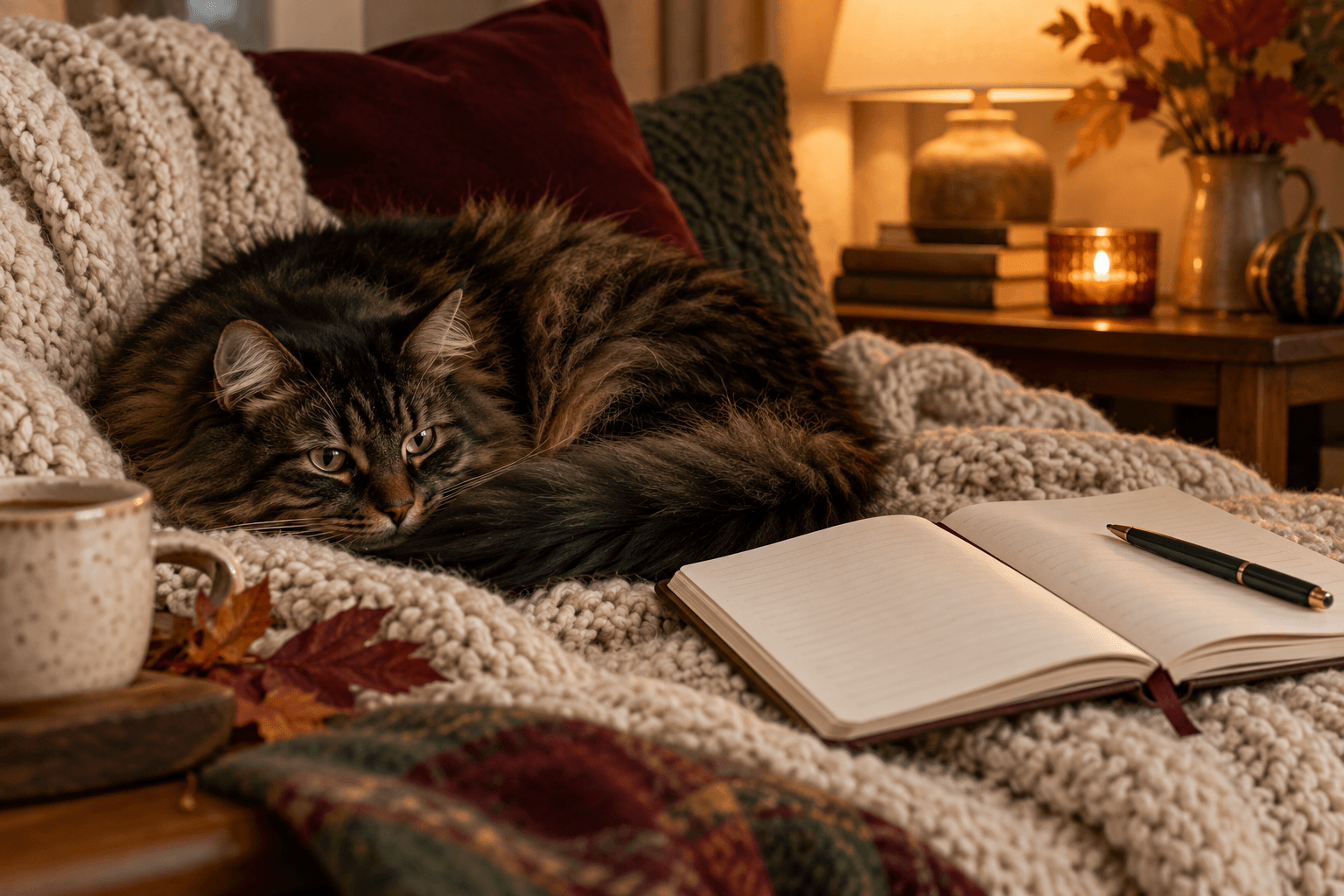
What turns journaling from a chore into something you look forward to is the feeling around it. For me, it’s a warm mug, a soft lamp instead of the big light, and usually my cat settling on the blanket right on top of the page I’m trying to write on.
You don’t need to recreate anyone else’s version. Notice what makes five minutes feel like yours, and repeat that. Over a few weeks, the notebook stops being a thing you should do and becomes a small pause you’d miss.
As December gets busier, those five minutes can be an anchor worth holding onto. I’ve written more about keeping a little space for yourself in how to get through December without losing yourself.
At the end of the year, these New Year journal prompts are a lovely way to look back on everything you have written.
A few gentle questions
Is it better to journal in the morning or the evening?
Neither is better. Morning journaling can help you set an intention for the day; evening journaling helps you close it. Try one for a week, then the other, and keep whichever feels more natural.
What’s the difference between journaling and a diary?
A diary usually records what happened. Journaling can include that, but also thoughts, feelings, gratitude, lists or plans. There are no rules about what belongs in it.
Can I journal on my phone instead?
Yes, if that’s what you’ll actually use. Many people find paper calmer because there are no notifications, but a notes app is better than a notebook you never open.
How long does it take for journaling to become a habit?
It varies from person to person. Rather than counting days, notice when you start reaching for the notebook without having to remind yourself. That’s the moment it has become yours.
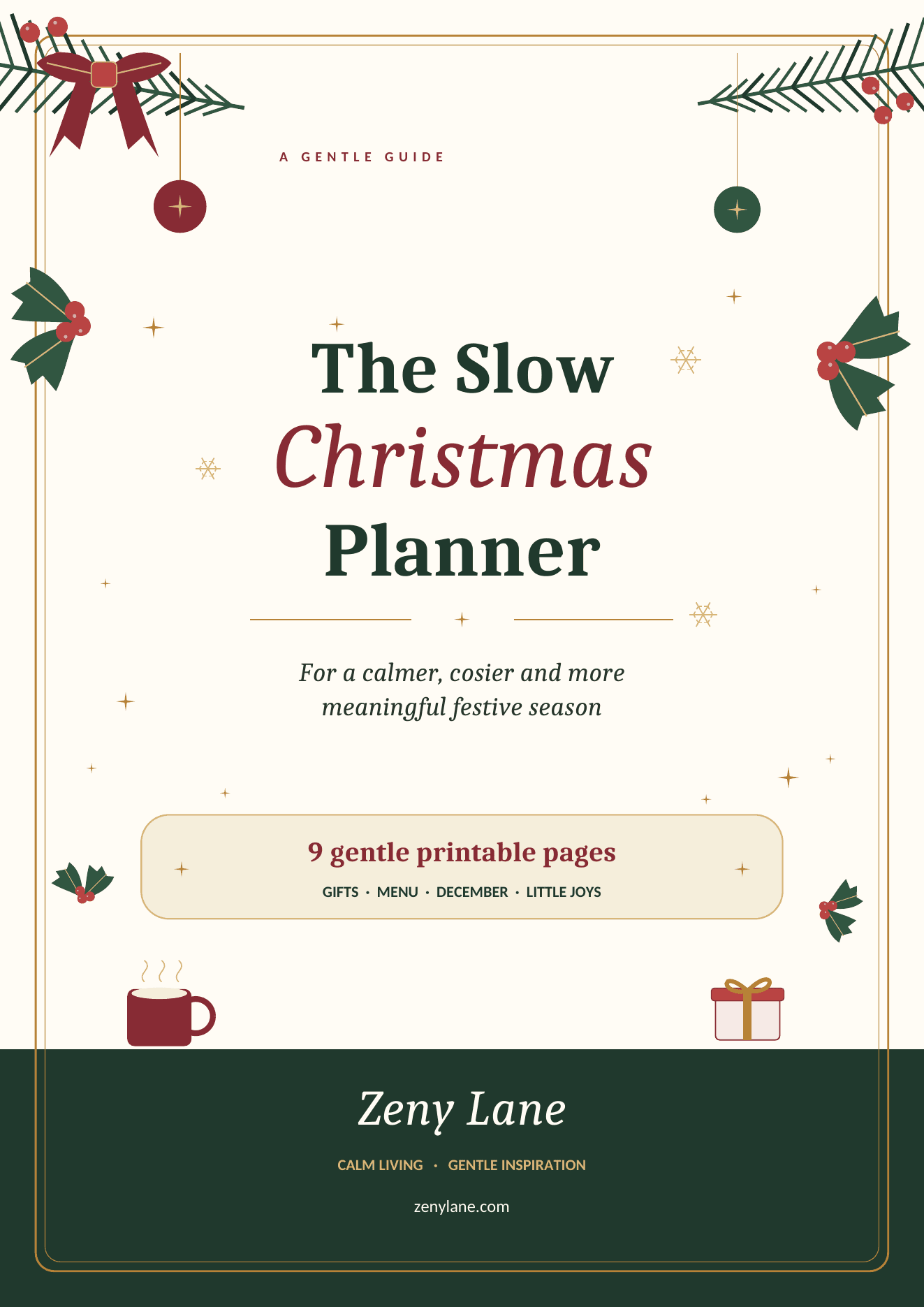
If you’d like somewhere gentle to plan the weeks ahead, my free Slow Christmas Planner is waiting for you when you join the Zeny Lane newsletter. It sits beautifully alongside a five-minute journal.
When you’re ready for a monthly version of this ritual, try my gentle new moon journaling ritual.
With warmth, Zeny
A little calm in your inbox
If you’d like a little more calm in your week, join the Zeny Lane newsletter. You’ll get gentle seasonal notes, new stories as they’re published, and free access to my Freebie Library of printable planners and gentle gifts.
No noise, no pressure. Just a quiet letter now and then.