Small-Batch Shortbread: An Easy 3-Ingredient Recipe for One Quiet Pot of Tea
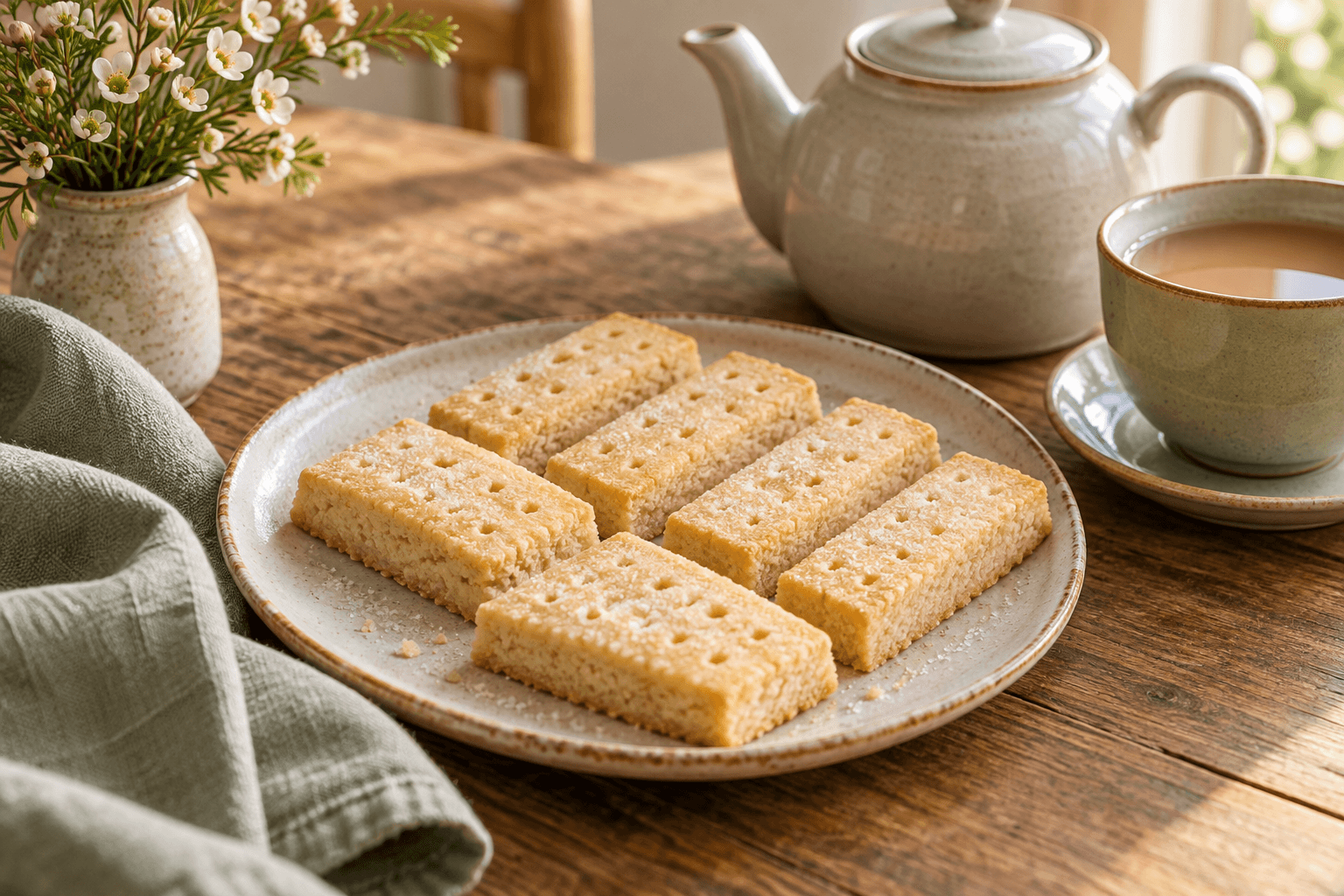
Small-batch shortbread is the easiest way to have something buttery and homemade with your tea without baking a whole tin. You need just three ingredients (butter, sugar and plain flour), one small bowl and about 45 minutes, most of which is the oven doing the work. This recipe makes 6 crisp, crumbly fingers. Enough for a treat, not enough for a problem.
I love a full tin of biscuits as much as anyone. The trouble is that a full tin, in my house, is never really “for guests”. It’s for me, at 4pm, then again at 4.20, then “just one more” while the kettle boils. A small batch is my gentle compromise.
The day I learned shortbread has opinions
The first time I made shortbread, I thought: three ingredients, how hard can it be? Very, as it turns out, if you’re impatient.
My butter was fridge-cold, and I didn’t fancy waiting, so I gave it a quick blast in the microwave. A “quick blast” became a small golden lake. I stirred in the sugar and flour anyway, pressed it into the tin and felt very pleased with myself. In the oven, it spread into one flat, shiny, slightly greasy sheet that looked less like shortbread and more like a buttery map of somewhere.
Second attempt: I let it cool completely before cutting. It shattered. I ended up eating shortbread gravel with a teaspoon, which, to be fair, was delicious. The cat came over, sniffed a crumb on the floor with deep suspicion, and walked away. Even she knew.
So here’s what shortbread taught me: soft butter, not melted. Cut while warm. And breathe. It’s a biscuit that rewards a slower pace, which is probably why I like it so much now.
What you need for 6 shortbread fingers
- 55 g unsalted butter, softened (½ US stick, or 4 tablespoons)
- 25 g caster sugar (2 tablespoons), plus a little extra to sprinkle. In the US, use superfine or regular granulated sugar.
- 85 g plain flour (about ⅔ US cup all-purpose flour)
- A small pinch of salt
That’s the classic shortbread ratio in miniature: 1 part sugar, 2 parts butter, 3 parts flour. Remember it and you can make any size batch without a recipe.
How soft should the butter be?
Soft enough that your finger leaves a dent when you press it, but still holding its shape. Take it out of the fridge about an hour before you start. If you forget (I always do), cut it into small cubes and it will soften in 15 to 20 minutes.
How to make small-batch shortbread, step by step
- Line a small baking tray with baking paper. Heat the oven to 160°C (140°C fan, 325°F, gas mark 3).
- In a bowl, beat the soft butter and sugar together with a wooden spoon for about a minute, until creamy and a little paler.
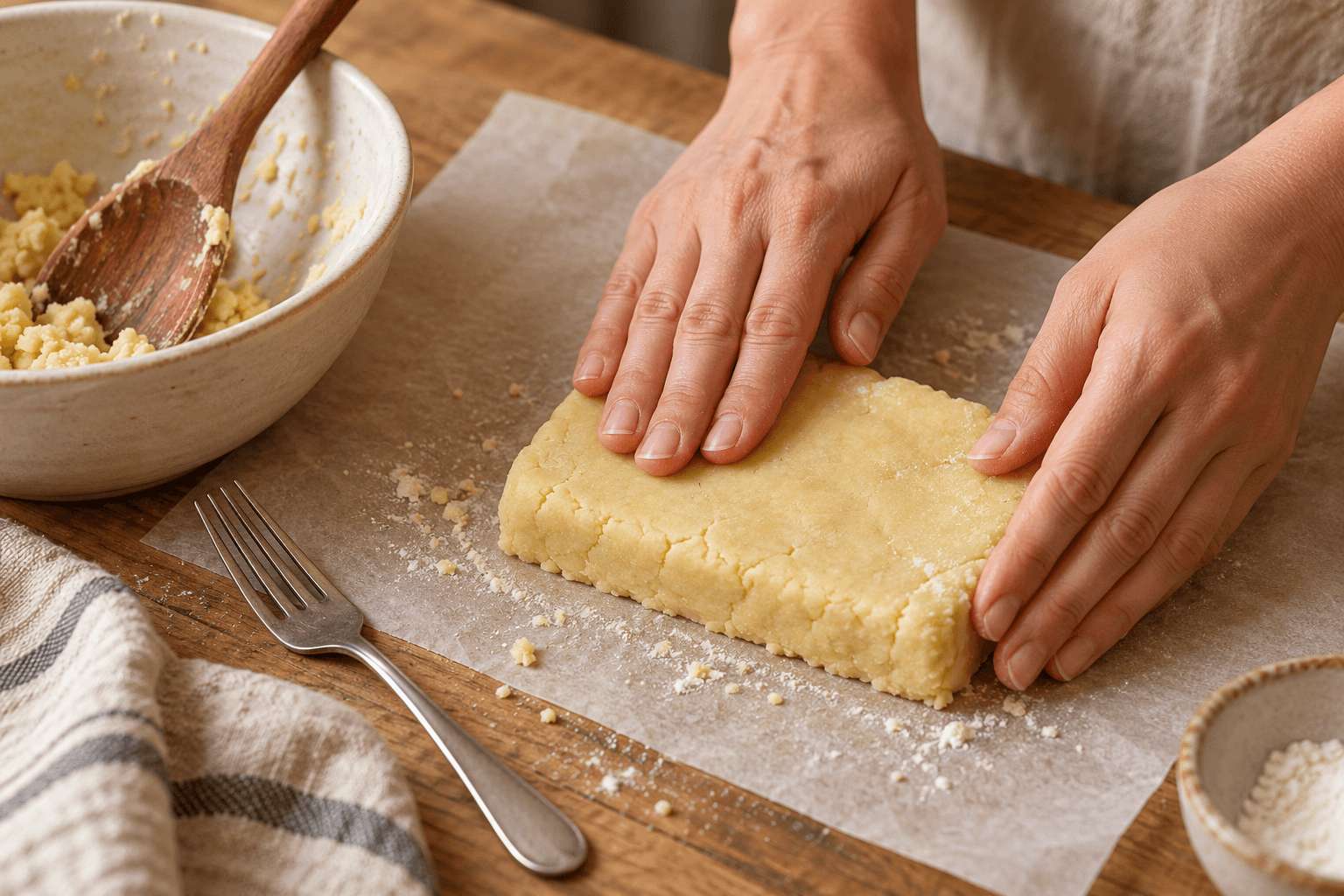
- Add the flour and salt. Stir, then use your hands to bring it together into a soft dough. It will look crumbly at first; keep gently pressing and it will come together.
- On the baking paper, press the dough into a neat rectangle about 1 cm thick (roughly 10 × 12 cm). Smooth the edges with your fingers.
- Cut it into 6 fingers with a knife, but leave them together. Prick each one a few times with a fork.
- Chill the tray in the fridge for 15 minutes. This helps the shortbread keep its shape instead of spreading.
- Bake for 20 to 25 minutes, until pale golden at the edges. Shortbread should stay light in colour, not brown.
- As soon as it comes out, sprinkle with a little sugar and cut along the same lines again while it’s still warm.
- Leave it on the tray for 10 minutes (it’s fragile when hot), then move the fingers to a rack to cool completely.
Why make shortbread in a small batch?
Because you get all the comfort of baking without a week of temptation on the counter. A small batch is quicker to mix, easy to bake on a quiet afternoon, and gone before it has a chance to go soft. It’s also a lovely way to bake when you live alone or with one other person, or when you just want something homemade with your tea today, not a project.
There’s a calm little rhythm to it, too: soften, stir, press, wait. Baking like this sits in the same place for me as the other small, simple daily rituals that make a day feel calmer.
Easy shortbread variations
- Lemon: add the finely grated zest of half a lemon with the sugar.
- Lavender: add a small pinch of dried culinary lavender. Truly a pinch; too much tastes like soap.
- Cinnamon: add ¼ teaspoon ground cinnamon to the flour.
- Vanilla: add a few drops of vanilla extract to the butter and sugar.
- Chocolate-dipped: once cool, dip one end of each finger in melted chocolate and let it set.
- Extra crumbly: swap 10 g of the flour for cornflour or rice flour for that melt-in-the-mouth snap.
How to enjoy it slowly
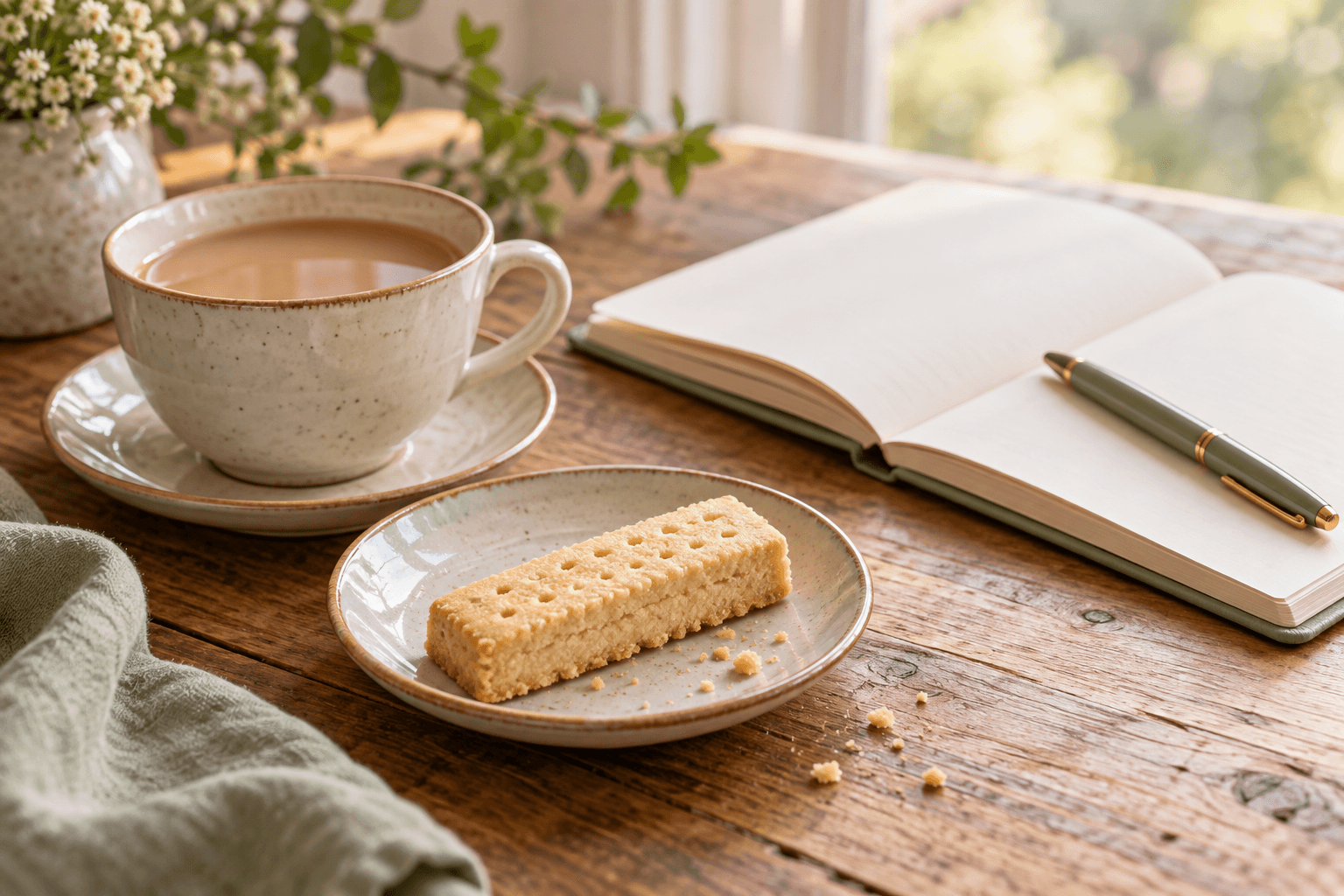
Shortbread and tea are an old, happy couple. In the colder months, I make a proper pot; in summer, two fingers of shortbread go beautifully with a glass of cold-brew sun tea. And if I’m sitting down with my notebook, a cup and one finger of shortbread make my five-minute journaling habit feel like a small treat rather than a task.
If you like little bakes made just for you, you might also enjoy my stovetop cinnamon rice pudding for one, another small, cosy recipe for quiet evenings.
A few gentle questions
Why did my shortbread spread?
Usually the butter was too soft or melted, or the dough went into the oven warm. Use soft but not melted butter, and chill the shaped dough for 15 minutes before baking.
Why did my shortbread crumble when I cut it?
It was cut after cooling. Shortbread firms up as it cools, so mark the fingers before baking and cut along the lines again while it’s still warm.
Can I use salted butter?
Yes. Just leave out the pinch of salt. Many people actually prefer the flavour.
How long does shortbread keep?
In an airtight tin, about a week. You can also wrap the unbaked dough well and freeze it for up to 3 months, then let it soften slightly and bake as above.
With warmth, Zeny
A little calm in your inbox
If you’d like a little more calm in your week, join the Zeny Lane newsletter. You’ll get gentle seasonal notes, new stories as they’re published, and free access to my Freebie Library of printable planners and gentle gifts.
No noise, no pressure. Just a quiet letter now and then.